
4 Double Materiality Assessment (DMA)
This chapter describes how Siegwerk identifies and assesses material sustainability impacts, risks and opportunities (IROs) in accordance with ESRS 1 and ESRS 2. Chapter 4.1 sets out the DMA process (ESRS 2 IRO-1). Material topics and the corresponding disclosure requirements are presented separately in Chapter 4.2 (ESRS 2 IRO-2).
This chapter constitutes a summary of the DMA process. More detailed methodological notes can be found in Chapter 13.4.
4.1 Process Description, Rating Methodology and Cut‑off Criteria
Section titled “4.1 Process Description, Rating Methodology and Cut‑off Criteria”Siegwerk conducted a double materiality assessment (DMA) for financial year 2025 in accordance with ESRS 1 and ESRS 2 (IRO-1). The objective was to identify sustainability matters that are material from an impact perspective (inside-out), a financial perspective (outside-in), or both.
The DMA covers Siegwerk’s own operations and upstream and downstream activities along the value chain, consistent with the reporting boundary described in Chapter 2.2. It forms the basis for determining the scope and depth of disclosures in this sustainability statement. The 2025 DMA was based on the 2024 DMA developed together with Ernst & Young.
The process was designed and executed by Global Sustainability (GS), with input from a cross-functional core team and subject-matter experts across regions and functions. External interviews were conducted to extend the stakeholder perspectives. Results were reviewed internally and discussed with management prior to validation.
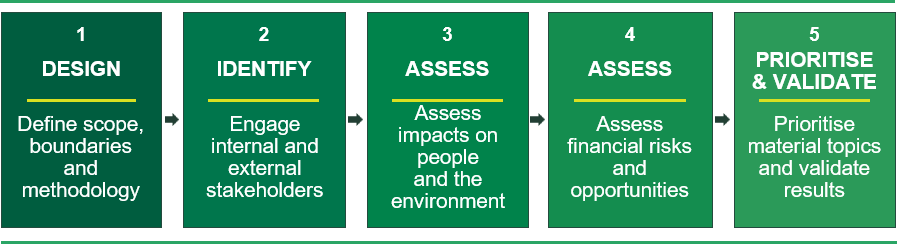
Figure 8: Double materiality assessment process
4.1.1 Design Phase
Section titled “4.1.1 Design Phase”Before identifying IROs, Siegwerk defined the methodological framework, time horizons and governance of the DMA. This design phase comprised:
- mapping of the value chain and affected stakeholders across upstream, own operations and downstream activities (ESRS 1 AR 9(a));
- definition of scoring dimensions, scales, probability weights and materiality thresholds, documented in the DMA methodology;
- definition of the stakeholder engagement approach for identification, assessment and validation phases; and
- establishment of roles and responsibilities, with Global Sustainability coordinating the process and regional sustainability teams contributing local insights.
The design elements are described in more detail below.
4.1.2 Identify: Value Chain Boundary and Stakeholder Mapping
Section titled “4.1.2 Identify: Value Chain Boundary and Stakeholder Mapping”The DMA was applied across Siegwerk’s value chain, from raw material sourcing through manufacturing and product use to end-of-life considerations. This scope is aligned with ESRS 1 and the value chain boundary disclosed under ESRS 2 BP-1.
Siegwerk’s value chain comprises upstream suppliers, own operations, and downstream partners, covering the full lifecycle of its products from raw material sourcing to end‑of‑life. In line with ESRS requirements, Siegwerk includes material impacts, risks and opportunities arising from both direct and indirect business relationships across upstream and downstream activities
Upstream, Siegwerk sources raw materials such as pigments, resins, additives and solvents from a global network of direct and indirect suppliers. For direct suppliers (tier 1) Siegwerk’s influence is overall limited. It can be somewhat stronger for smaller raw material suppliers, such as pigment suppliers. For many suppliers however, Siegwerk is too small to have meaningful influence including large chemical companies. For indirect suppliers (tier n), Siegwerk usually has no control. Sourcing activities are key drivers of environmental impacts, (particularly resource use and greenhouse gas emissions) and social impacts (especially working conditions in the value chain), and represent significant dependencies within the value chain.
Own operations focus on the production of inks and coatings across multiple technologies (solvent-, water-, oil-based and UV/EB). These processes involve energy consumption, emissions, waste generation and occupational health and safety considerations, supported by internal logistics and product packaging activities. Siegwerk has full control over its operations.
Downstream products are distributed to converters and printers, applied in the packaging converting process, and ultimately reach the consumer use phase and end‑of‑life treatment, including recycling and disposal. These stages are critical for circular economy outcomes and potential environmental impacts. The control Siegwerk has on downstream partners is limited. While inks & coatings play a significant role in the environmental performance of the packaging (e.g. recyclability), decision making processes are heavily driven by brand-owners and converters/printers, with regulatory requirements and price competitiveness being key decision drivers.
This value chain perspective underpins Siegwerk’s double materiality assessment and enables a comprehensive understanding of where sustainability impacts originate along its business model. The same value chain logic underpins HorizonNOW 2030.
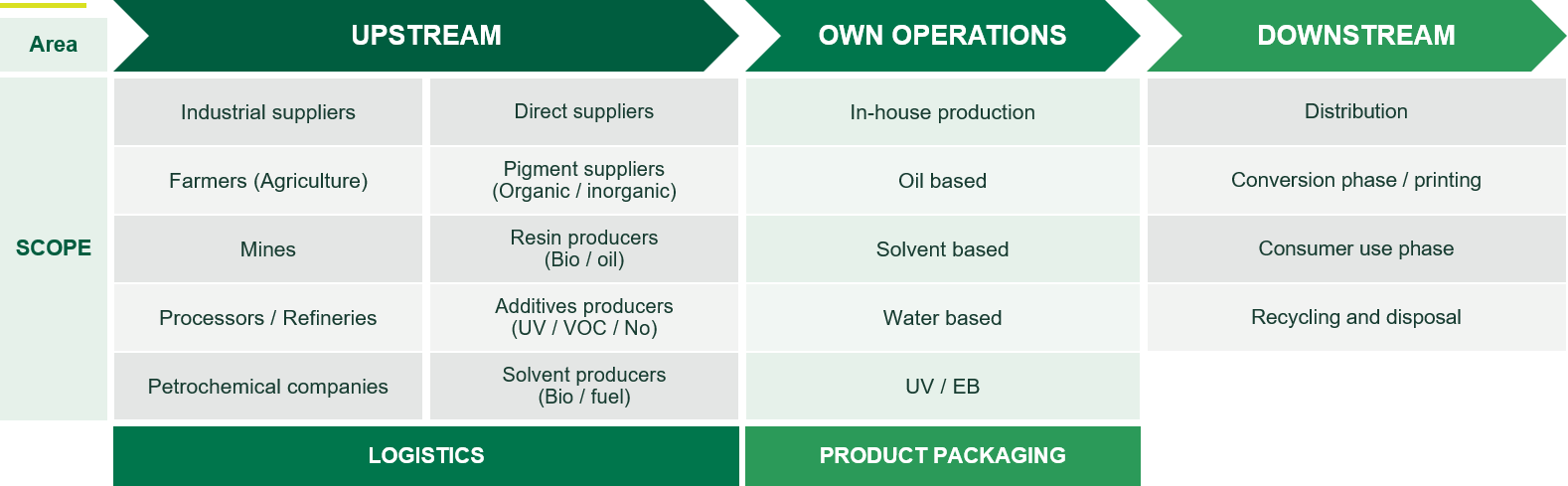
Figure 9: Value chain scope of the double materiality assessment
4.1.3 Identify: Identification of Impacts, Risks and Opportunities (IRO)
Section titled “4.1.3 Identify: Identification of Impacts, Risks and Opportunities (IRO)”A structured long list of sustainability matters and IROs was established based on the architecture of the European Sustainability Reporting Standards (ESRS), using the topic and sub-topic structure set out in ESRS 1 paragraph 10 and Appendix A (List of topics), with IROs mapped at a more granular level where needed for assessment.
For each sustainability matter, actual and potential impacts on people and the environment, as well as sustainability-related risks and opportunities affecting the undertaking’s development, performance and position, were identified across the value chain.
To support completeness – particularly for upstream exposure – we supplemented the ESRS structure with insights from internationally recognized frameworks and tools, including:
- UNEP Science Based Targets Network (SBTN) sectoral materiality tools;
- GRI Sector Standards;
- SASB Standards / SASB Navigator (Resource Transformation and Chemicals); and
- ENCORE.
These sources helped identify sector-typical environmental and social impact drivers and supported mapping of IROs to ESRS topics. The initial identification of IROs was supported by Ernst & Young and their proprietary ESG Suite.
IROs were described as concretely as possible, with a clear link to business activities, value chain position and affected stakeholders. Generic or undifferentiated descriptions were avoided to ensure decision-useful assessment.
4.1.4 Assess & Prioritize: Materiality Impacts Risks & Opportunities
Section titled “4.1.4 Assess & Prioritize: Materiality Impacts Risks & Opportunities”To gauge the relevance of the identified IRO, each IRO was assessed leading to a materiality score as a tool for prioritization of IROs.
The assessment process is outlined below in detail. In general, the assessment was always done on an ordinal scale of 1-5 across the described dimensions severity/magnitude and likelihood/probability. In general, for a topic to become material the overall score needs to equal to or higher than 3. A threshold of 3 is used because the scoring model is ordinal and category-based: 3 is the first level defined as clearly significant (“moderate to high”), and therefore the minimum defensible cut-off for materiality. Exceptions apply for impact with a link to human rights and those with selected business-characteristic impacts – as will be described in the following.
Where materiality was concluded at sub-topic level, we report only the information relevant to that sub-topic, in line with ESRS 1 paragraph 30. Disclosure Requirements that relate solely to non-material sub-topics under the same topical standard are therefore omitted.
The resulting list of material topics and sub-topics is disclosed in Chapter 4.2.
Assessment of impact materiality (inside-out)
Section titled “Assessment of impact materiality (inside-out)”The DMA is defined as offering three pathways to materiality: (1) general impact materiality; (2) human rights and (3) business-characteristic impacts.
General impact materiality
Impact materiality was assessed in line with ESRS 1, based on severity and likelihood. Severity was evaluated using three dimensions: scale, scope and remediability. Each dimension was scored on an ordinal scale from 0 to 5, where higher values indicate more severe impacts.
Likelihood was assessed on a 0 to 5 scale and translated into probability weights for potential impacts. Separate formulas were applied for positive and negative impacts.
Impact materiality was determined where the overall impact score was at least 3. The overall impact score is derived as follows:
- For negative impacts, the score combines scale, scope and remediability with likelihood;
- for positive impacts, the score combines scale and scope with likelihood.
Human rights impact materiality
For potential negative human rights impacts, severity takes precedence over likelihood, in accordance with ESRS 1. The DMA put this principle into action by establishing human rights override in the DMA. Concretely, for IROs marked as human rights-related, materiality is finalized through an automated override in the assessment model. Independently of whether impact score including likelihood meets the cut-off, the IRO is classified as material if the human rights flag is set to “Yes” and either the average of the three severity scores (scale, scope and remendability) is at least 3, or any one of those severity scores equals 5.
Direct human rights impacts are identified in line with the UN Guiding Principles on Business and Human Rights (UNGPs) and refer to adverse impacts on individuals or groups (rights-holders) that can be clearly linked to internationally recognized human rights. An impact is considered a direct human rights impact where it:
- affects identifiable people or groups (e.g. workers, communities),
- involves a clear causal pathway between the company’s activities and the harm; and
- can be linked to a specific human right (e.g. ILO Core Conventions, Universal Declaration of Human Rights).
Typical examples include forced labor, child labor, unsafe working conditions, discrimination, or health impacts from hazardous exposures.
Systemic environmental impacts (e.g. climate change at global level) are not classified as direct human rights impacts unless a specific and attributable harm pathway to rights-holders can be identified – for example, local pollution causing health impacts or water use affecting community access to water.
Business-characteristic impacts
Under ESRS 1 paragraph 43(c), the materiality assessment also considers whether information on an impact and on how it is managed through policies and actions remains decision-useful to users, irrespective of how effectively the impact is already controlled or how tightly the topic is regulated. On that basis, residual scores after existing prevention and mitigation measures were not used alone to exclude impacts that are characteristic of Siegwerk’s business model and value chain.
Assessment of financial materiality (outside-in)
Section titled “Assessment of financial materiality (outside-in)”Financial materiality was assessed based on the magnitude of potential financial effects and their likelihood, in line with ESRS 1. Magnitude was scored on a 1 to 5 scale, anchored to potential effects on operating EBITDA. Qualitative descriptors for reputational, legal, regulatory and operational effects (e.g. recovery time, regulatory action, operational downtime) were used to support consistent scoring.
Gross and net perspective
Section titled “Gross and net perspective”For actual negative impacts, severity was assessed based on how they materialized during the reporting year (ESRS 1.43(a)). Remediation carried out in the same period was not taken into account in this assessment.
For potential negative impacts, only prevention and mitigation measures already in place were considered, and only where they could reasonably be expected to reduce severity or likelihood (ESRS 1.43(b)). Planned or future actions were excluded.
Finally, measures taken to prevent, mitigate or remediate negative impacts were not recorded as positive impacts. Positive impacts were assessed separately, based on the beneficial effects of Siegwerk’s activities, products and services, without offsetting them against negative impacts (ESRS 1.44).
4.1.5 Validate: Continuous Review
Section titled “4.1.5 Validate: Continuous Review”The outcomes of this DMA are consolidated and validated through internal expert review and appropriate governance-level oversight, applying reasonable and supportable judgement.
The DMA is treated as a dynamic process and is reviewed at least annually to reflect changes in the business model, value chain, regulatory environment and stakeholder expectations.
The DMA for FY2025 was subject to internal validation in 2025 and qualitatively discussed with the external auditor as part of the assurance readiness process in 2026.
4.1.6 Stakeholder Engagement in the DMA
Section titled “4.1.6 Stakeholder Engagement in the DMA”Stakeholder engagement is integral to the DMA and Siegwerk’s due diligence approach (ESRS 1; ESRS 2 SBM-2). It feeds into the identification, prioritization and validation steps of the IROs.
Siegwerk distinguishes between affected stakeholders and users of sustainability statements. Their interests and views were considered when identifying and assessing IROs across the value chain.
Key stakeholder groups engaged in or informing the DMA include employees, suppliers, customers, workers in the value chain, local communities, investors and lenders, policy makers and industry associations, and NGOs. Nature is considered as a silent stakeholder, represented through environmental standards, regulatory compliance and science-based frameworks.
A summary of engagement formats and frequencies is provided in Chapter 13.4.5. Governance bodies, including the Global Executive Committee (GEC), are informed of stakeholder perspectives material to strategy and reporting (see Chapter 3.4).
4.2 Material Topics Identified
Section titled “4.2 Material Topics Identified”Material topics identified
The double materiality assessment described in Chapter 4.1 resulted in eight material topics across the environmental and social standards. Materiality was concluded at the level of sub-topics and, where the assessment required a finer resolution, at the level of sub-sub-topics. The table below lists each material topic together with the perspective that made it material, the position in the value chain where the underlying impacts, risks and opportunities arise, and the chapter in which the topic is reported.
Three routes to materiality were applied, all of which are described in Chapter 4.1.4. Most topics reached the threshold through the overall impact or financial materiality score. A second group became material through the human rights override, which classifies an impact as material on the strength of its severity even where the likelihood of occurrence is low; these impacts sit almost entirely in the upstream value chain. A third group covers impacts that are characteristic of our manufacturing model and were retained as material under ESRS 1 paragraph 43(c), because information on the impact and on how we manage it remains decision-useful irrespective of the effectiveness of existing controls. This applies to air and water pollution from our own operations.
ESRS standard | Topic | Sub-topic | Sub-sub-topic | Basis for materiality | Value chain coverage | Reported in |
|---|---|---|---|---|---|---|
E1 | Climate change | Climate change mitigation | — | Impact | Upstream, own operations | Chapter 5 |
E1 | Climate change | Energy | — | Impact | Upstream, own operations | Chapter 5 |
E2 | Pollution | Pollution of air | — | Impact (human rights override, upstream; paragraph 43(c), own operations) | Upstream, own operations | Chapter 6 |
E2 | Pollution | Pollution of water | — | Impact (human rights override, upstream; paragraph 43(c), own operations) | Upstream, own operations | Chapter 6 |
E3 | Water and marine resources | Water | Water discharges | Impact (human rights override) | Upstream | Chapter 11 |
E4 | Biodiversity and ecosystems | Direct impact drivers of biodiversity loss | Climate change | Impact | Own operations | Chapter 5.7 |
E4 | Biodiversity and ecosystems | Direct impact drivers of biodiversity loss | Land-use change, freshwater-use change and sea-use change | Impact (human rights override) | Upstream | Chapter 11 |
E4 | Biodiversity and ecosystems | Impacts and dependencies on ecosystem services | — | Impact (human rights override | Upstream | Chapter 11 |
E5 | Circular economy | Resource outflows related to products and services | — | Financial | Downstream | Chapter 7 |
S1 | Own workforce | Working conditions | Health and safety | Financial | Own operations | Chapter 9.2 |
S2 | Workers in the value chain | Other work-related rights | Child labor | Impact (human rights override) | Upstream | Chapter 10 |
S2 | Workers in the value chain | Other work-related rights | Forced labor | Impact (human rights override) | Upstream | Chapter 10 |
S3 | Affected communities | Rights of indigenous peoples | Cultural rights | Impact (human rights override) | Upstream | Chapter 11 |
S3 | Affected communities | Rights of indigenous peoples | Free, prior and informed consent | Impact (human rights override) | Upstream | Chapter 11 |
S3 | Affected communities | Rights of indigenous peoples | Self-determination | Impact (human rights override) | Upstream | Chapter 11 |
Table 7: Overview of material topics
Reporting structure and scope
The material topics differ considerably in how far our influence reaches, and the depth of reporting follows that difference rather than treating all topics alike. Climate change, pollution, circular economy, the health and safety of our own workforce, and child and forced labor in the upstream value chain are topics where we set targets, run programs and can demonstrate progress. They are presented in dedicated chapters as outlined in Table 7.
The remaining material topics (water and marine resources (ESRS E3), biodiversity and ecosystems (ESRS E4) and affected communities (ESRS S3) became material almost exclusively through potential human rights impacts in the upstream value chain, where our leverage is structurally limited and data availability is lower.
Where materiality was concluded at sub-topic level, we report only the information relevant to that sub-topic, in line with ESRS 1 paragraph 30. Disclosure Requirements that relate solely to non-material sub-topics under the same topical standard are therefore omitted. The complete mapping of Disclosure Requirements to their location in this statement is provided in the ESRS content index in Chapter 13.1 and the phasing-in provisions we rely on are set out in Chapter 13.2.
Business conduct (ESRS G1) and consumers and end-users (ESRS S4) were assessed and did not meet the materiality thresholds from either perspective. The reasoning behind these conclusions, together with the full list of assessed but non-material sub-topics, is documented in Chapter 13.1.
The reporting year 2025 closes the HorizonNOW 2025 cycle and precedes the first reporting year under HorizonNOW 2030. The double materiality assessment (DMA) was prepared as part of CSRD readiness and the definition of the HorizonNOW 2030 strategy, marking Siegwerk’s shift from a simple materiality assessment to a double materiality assessment in line with the ESRS. Performance in 2025 is therefore reported against HorizonNOW 2025 targets and may not always cover the same scope of material topics as defined in the DMA presented here.