9 Own Workforce (ESRS S1)
ESRS Ref: ESRS S1 Own Workforce / Sub-topic: Health and safety
ESRS cross-references: ESRS E1 Climate Change; ESRS E2 Pollution
HorizonNOW 2030: Sustainable operations, target 5
This chapter is divided into three parts. The first part provides contextual information on our workforce composition. The second part covers the health and safety of our own workforce, which is the only ESRS S1 sub-topic identified as material in our double materiality assessment (DMA) and is therefore the only own-workforce topic for which we report policies, actions, targets, and metrics. The third part is supplementary information: it sets out our voluntary gender representation ambition, which we regard as part of the basis on which we operate and which does not result from the materiality assessment.
9.1 General Workforce Data and Composition (ESRS S1)
Section titled “9.1 General Workforce Data and Composition (ESRS S1)”The following workforce metrics are provided as contextual information in line with the structure of ESRS S1 para. 20. Data are reported by headcount at the end of the reporting period and cover the reporting boundary as described in Chapter 2.3.
Total employees amounted to 5,083 of whom 81% were male and 19% were female. This split is largely anchored int the significant proportion of employees in production. The breakdown and comparisons to 2024 are included in Table 18.
Gender | Number of employees (headcount) – current reporting period (2025) | Number of employees (headcount) – previous reporting period (2024) |
|---|---|---|
Male | 4118 | 3875 |
Female | 965 | 923 |
Other | 0 | 0 |
Not reported | 0 | 0 |
Total | 5083 | 4798 |
Table 18: Headcount by gender (2024 & 2025) (ESRS S1-20(a))
Germany remains to be the country with the largest number of employees, driven by our site in Siegburg. Headcount growth at many of the Top 10 sites reflects overall business growth and strategic investments (see Table 19).
Country | Number of employees (headcount) – current reporting period (2025) | Number of employees (headcount) – previous reporting period (2024) |
|---|---|---|
Germany | 1113 | 1065 |
India | 907 | 811 |
USA | 444 | 461 |
China | 334 | 338 |
Mexico | 319 | 279 |
Brazil | 306 | 278 |
Indonesia | 286 | 246 |
France | 280 | 282 |
Turkiye | 242 | 189 |
Thailand | 186 | 178 |
Table 19: Number of employees at 10 largest sites (2024 & 2025) (ESRS S1-20(b))
Siegwerk employs temporary employees at the share shown in Table 20 to cover for time specific absences (e.g. parental leave), and to account for potential fluctuation in production volume and the resulting work forcerequirements. The rate of permanent to non-permanent employees is stable. Where possible, Siegwerk aims to transition temporary employees into permanent employment.
Gender | Number of permanent employees (headcount) – Current reporting period (2025) | Number of permanent employees (headcount) – Previous reporting period (2024) | Number of temporary employees (headcount) – Current reporting period (2025) | Number of temporary employees (headcount) – Previous reporting period (2024) |
|---|---|---|---|---|
Male | 3905 | 3708 | 213 | 167 |
Female | 920 | 881 | 45 | 42 |
Other | 0 | 0 | 0 | 0 |
Not reported | 0 | 0 | 0 | 0 |
Total | 4825 | 4589 | 258 | 209 |
Table 20: Employees by contract type, broken down by gender (2024 - 2025) (S1-20(c)
The turnover rate in 2025 was 13% based on headcount data for permanent employees. This is an industry typical runover rate, also common for Siegwerk.
Turnover rate in reporting year (2025) | |
|---|---|
Based on permanent employees (headcount) | 13% |
Table 21: Turnover rate (2025) (S1-20(d))
We assessed whether non-employees in our own workforce are connected to material impacts, risks or opportunities under ESRS S1 and concluded that they are not material for reporting purposes. The assessment rests on three considerations:
- Scale and scope: Alongside our employees, our own workforce included approximately 8% non-employees, dispersed across many sites and functions. So, no concentration of exposure arises for this group that would differ in nature from that of employees.
- Coverage: In line with ESRS 1 para. 43(b), implemented policies and actions can be taken into account where they can reasonably be assumed to reduce severity or likelihood: non-employees working on our sites are covered by the same site-level health and safety management systems, risk assessments, safety instructions and incident reporting obligations as employees, and agency and contractor relationships are additionally governed by our Business Partner Code of Conduct and local legal requirements.
- Non-specificity: None of the ESRS S1 sub-topics screened for this group reached the materiality threshold applied in our DMA, either from an impact or a financial perspective. Accordingly, we do not apply the separate disclosure requirement on non-employees, and the health and safety metrics under ESRS S1-13 are reported for employees only, while the coverage metric refers to our own workforce as a whole.
9.2 Health and Safety of our Own Workforce (ESRS S1)
Section titled “9.2 Health and Safety of our Own Workforce (ESRS S1)”9.2.1 Relevance of Topic
Section titled “9.2.1 Relevance of Topic”Health and safety is the material ESRS S1 sub-topic for Siegwerk identified through the DMA process.
Our operations may pose significant health and safety risks. Mechanical work involves heavy machinery and equipment and can lead to physical injuries such as cuts, fractures or crush injuries, if safety protocols are not followed. Certain raw materials, in particular photo initiators used in UV-based inks, may cause chemical burns. Solvent-based production carries the risk of exposure to volatile organic compounds and an elevated fire risk, as nitrocellulose is highly flammable.
The safety of our people is a primary responsibility. In addition, failure to follow best practice, or working time lost due to injuries, creates financial exposure through additional healthcare costs and the need to cover absences with additional staff. In our DMA, the financial risk associated with breaches of health and safety requirements was scored above the materiality threshold. This classifies health and safety as a material topic; the assessment also reflected effects on our external sustainability ratings.
9.2.2 Metrics and Targets
Section titled “9.2.2 Metrics and Targets”Both for the strategy cycle HorizonNOW 2025 (against which this report will assess progress) as well as HorizonNOW 2030 (covering the years 2026 – 2030) Siegwerk’s group target is to sustain a Total Incident Rate (TIR) below 1.0. Siegwerk defines Total Incident Rate (TIR) as the number of recordable injuries (lost time accidents, medical cases and restricted duty cases) per 200,000 hours worked.
The TIR was also one of the key performance indicators of our ESG-linked loan, reviewed annually by an independent third party. Health and safety metrics are compiled from our Global Incident Notification and Investigation Reporting system, which defines the criteria for recordable incidents.
9.2.3 Policies and Governance
Section titled “9.2.3 Policies and Governance”The importance of health and safety, together with our TIR target, is anchored in our Sustainability Policy. Implementation rests on standard operating procedures where these are appropriate, general and activity-specific risk assessments that define individual measures, minimum requirements for safe equipment, and the Global Incident Notification and Investigation Reporting process. Health and safety is also a fixed element of our global HSE audits (Chapter 12.2), and local emergency response procedures are in place.
Health and safety is explicitly the responsibility of every employee and is steered both globally and locally. Global HSE sets standards, exercises control and governance - for example through audits - and acts as an advisor to the sites. Reporting incidents in the central recording system is everyone’s responsibility; entries are checked and validated by Global HSE. The TIR is reported quarterly at executive and supervisory board level.
All employees in our own workforce are covered by a health and safety management system. Compliance with legal standards is the minimum of our approach; in addition, selected sites are certified to ISO 45001. An overview of certificates is provided in Chapter 12.4.5.
9.2.4 Actions
Section titled “9.2.4 Actions”General approach
Section titled “General approach”Our “Safety First – It starts with me!” approach addresses the safety of all employees and the safe operation of our facilities worldwide. To reach a sustainable TIR of less than 1, the Global Health, Safety and Environment team continuously develops measures to strengthen our safety culture. The “Safety First - It starts with me!” initiative, launched in December 2022, is designed to give employees the tools and knowledge needed to meet our safety targets and to share that knowledge step by step.
To understand the level of safety awareness across the organization, Siegwerk completed a global Safety Culture Assessment across all Centers of Excellence in 2023/2024. The assessment involved 3,271 employees and 524 interviews and resulted in an overall safety culture score of 1.83, corresponding to a reactive maturity level and indicating progression towards a preventive safety culture. Communication and workforce involvement were identified as the key opportunities for improvement.
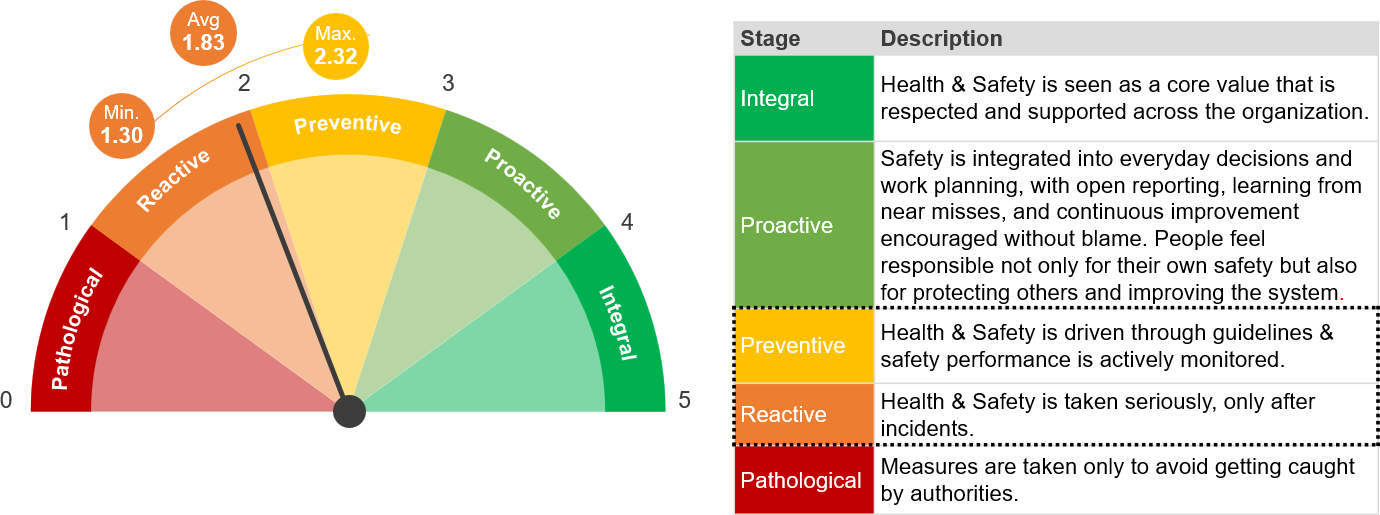
Figure 28: Results global Safety Culture Assessment 2024
In response, we continue to implement Safety First globally with a focus on leadership engagement, employee participation, proactive hazard identification, regular safety discussions, safety culture training, inspections, audits and the systematic use of safety performance data. The aim is to reach a proactive safety maturity level across all Centers of Excellence, Business Centers and In-House locations by 2030. Operational safety learning is reinforced through Key Safe Behaviors micro-learning, which reached 3,295 participants in the reporting year (see the training overview in Chapter 12.3).
Awareness is further strengthened through the World Day for Safety and Health at Work on 28 April, which all Centers of Excellence mark with site events, safety demonstrations, emergency drills, first aid training and lectures by subject-matter-specialists.
Practical case studies
Section titled “Practical case studies”Increasing fire safety
Section titled “Increasing fire safety”At Siegburg (Germany), safety requirements shaped the design of two new varnish production lines, including one for nitrocellulose-based products, alongside a new site-wide fire extinguishing concept.
Fire prevention was at the heart of a global program to replace plastic intermediate bulk containers (IBCs) with metal containers in China, Turkey, Indonesia, Thailand, India, Switzerland, and Colombia. The replacements are to be continued in 2026.
Reducing dust and VOC exposure
Section titled “Reducing dust and VOC exposure”Siegwerk also invested in controlling exposure to dust, vapors, and solvents through dust collectors, local exhaust ventilation, gas detectors, and VOC monitoring in Shanghai. Limiting exposure to volatile organic compounds protects our people while also reducing the air emissions described in Chapter 6.
Increasing ease of work
Section titled “Increasing ease of work”Further measures covered machine safety, ergonomics, and safe material handling, including workstation adaptations for employees with recognized disability status in France. We also began treating rising workplace temperatures as an occupational health topic, improving cooling in India and Central America.
9.2.5 Progress & Outlook
Section titled “9.2.5 Progress & Outlook”Progress
Section titled “Progress”The target of sustaining a TIR below 1.0 was achieved with a rate of 0.98 (Last 12-month values). Viewed over a longer period, the TIR fluctuates but the underlying trend line continues to decline.
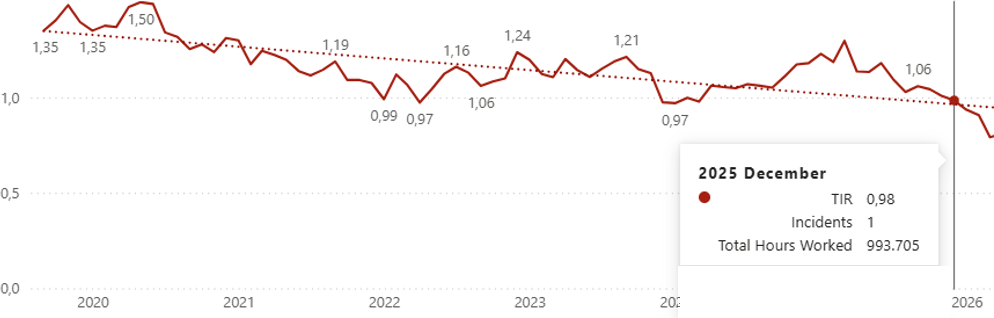
Figure 29: TIR development since 2020
Workers’ safety is a continuous effort, and the following priorities carry into the next period:
- continuation of the fire safety program, including further investment in metal intermediate bulk containers and upgrades to fire extinguishing equipment;
- a second Safety Culture Assessment, including workshops and action tracking in global tool called Cority, with a 2027 focus on higher-risk Centers of Excellence and those with weaker results;
- implementation and reinforcement of Key Safe Behaviors;
- regular Toolbox Talks and documented Safety Walks recorded in Cority;
- structured Safety Committee meetings at site level;
- delivery of HSE training based on a structured training plan; and
- further strengthening of proactive safety reporting.
9.3 Voluntary Commitment: Gender Representation in Leadership
Section titled “9.3 Voluntary Commitment: Gender Representation in Leadership”Supplementary information.
We include this section voluntarily. Equal treatment and opportunities for all – including gender equality – was assessed in our DMA and was not identified as a material sub-topic, either from an impact or from a financial perspective. Among other factors, the assessment took into account that a Group-wide equal pay analysis has been completed and currently shows parity between women and men. Therefore, gender representation is a voluntary commitment and all information hitherto is supplementary.
Therefore, we pursue balanced gender representation because we regard it as part of the basis on which we operate, not as a reporting obligation. A modern industrial company should draw on the widest possible talent pool, and diversity in leadership supports better decision-making, a stronger culture, and greater resilience. The ambition is anchored in HorizonNOW, in the Sustainable Operations focus area, rather than in the DMA. We began with gender as our first Group-level diversity metric – a deliberate choice of a dimension that can be measured consistently and lawfully across all Siegwerk entities, and not a decision to exclude other dimensions of diversity. We concentrate on leadership because leaders shape the culture and the processes that determine whether an inclusive environment takes hold throughout the organization.
Under HorizonNOW 2025 we set out to double female representation at executive level against a 2020 baseline. HorizonNOW 2030 broadens the ambition to 30 percent female representation in leadership positions (beyond just the executive level) by 2030. This applies to a considerably larger part of our employee base and increases the number of managers directly able to influence the target through their hiring and development decisions.
Strategy cycle | Voluntary ambition | Target year | Baseline |
|---|---|---|---|
HorizonNOW 2025 | Double (increase by factor 2) female representation at executive level | 2025 | 2020 |
HorizonNOW 2030 | Increase female representation in leadership positions to 30% | 2030 | – |
Table 22: Voluntary gender representation targets under HorizonNOW
We overachieved our target to double (grow by factor 2 (2x)) female representation at executive level, achieving a growth factor of 2.5, compared to the 2021 baseline (see Figure 30).
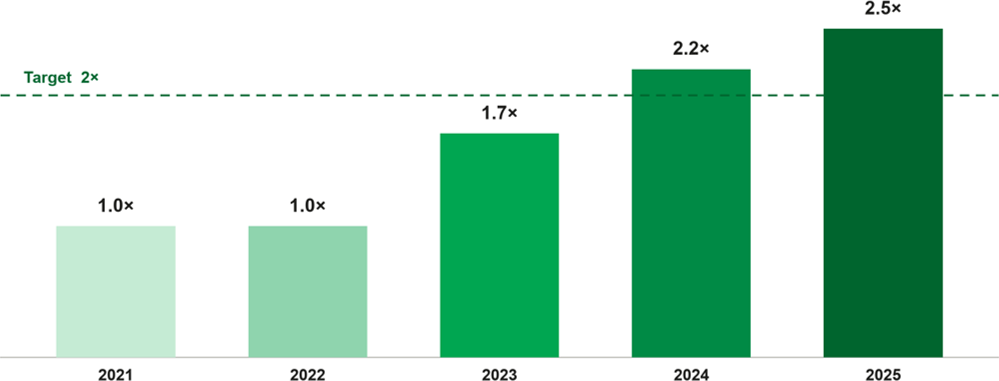
Figure 30: Development of female representation at executive level 2021-2025
This progress was underpinned by the group-level diversity, equity and inclusion journey which was started as part of HorizonNOW 2025. Because lasting progress depends on a culture shift in senior leadership, we first trained the leadership team on the business benefits of diverse teams. Building on this, we addressed unconscious bias through targeted training for selected management teams, focusing on how bias can affect recruitment, hiring, promotion and team development. In addition to leadership training, regional initiatives were rolled out:
- Siegwerk Indonesia launched the Women of Inspiration Awards;
- the mentorship program “Mit Frauen in Führung” (women in leadership) was run in Germany;
- International Women’s Day was marked at sites in Colombia, Mexico, Türkiye, Brazil and India; and
- an information and discussion series covered topics such as women and finance.
As part of the continued voluntary commitment and to remain competitive in a rapidly changing environment, Siegwerk must attract, develop and retain the strongest possible talent base. We recognize that female talent remains underrepresented in leadership positions and that this potential is not yet fully leveraged. Therefore, as part of HorizonNOW 2030 our approach extends beyond recruitment and places particular emphasis on the development, retention and advancement of internal female candidates, through targeted development opportunities, peer networks and increased exposure to leadership challenges. Advancement remains performance-driven and based on capability, potential and business impact. By strengthening the internal pipeline, we aim to ensure that future leadership positions can be filled from the widest possible range of qualified candidates, working towards the voluntary 30% ambition for 2030.