
12 Overarching Implementation Programs and Activities
12.1 SustainUP: Siegwerk’s Supplier Sustainability Program
Section titled “12.1 SustainUP: Siegwerk’s Supplier Sustainability Program”This section serves as the reference point for how Siegwerk engages with its suppliers. It describes the full operating model behind SustainUP. Outcome metrics are included in Chapter 10 for human rights and in Chapter 5 for climate-related topics.
12.1.1 Why a Program
Section titled “12.1.1 Why a Program”Sustainable products cannot be achieved without sustainable procurement. A large share of Siegwerk’s climate, human rights and upstream environmental exposure sits in purchased goods and services and in deeper tiers of the raw-material value chain. HorizonNOW 2025 established a common baseline by securing supplier commitment to the principles of the United Nations Global Compact. HorizonNOW 2030 goes further: SustainUP, launched mid-2025, is the operating system that turns policy expectations into risk-based screening, supplier development, carbon engagement and escalation.
SustainUP is designed to reduce Scope 3 emissions from purchased goods and services in line with our SBTi-aligned pathway, develop suppliers to reduce environmental and human rights risks, and promote transparency and continuous improvement through tailored engagement. It brings the Human Rights Policy and Guiding Principles and the Business Partner Code of Conduct into day-to-day purchasing practice.
Focus areas of SustainUP for the HorizonNOW 2030 strategy cycle lie in human and labor rights at our suppliers and pushing climate action into our upstream supply chain. Both focus areas are anchored in the strategy with concrete targets: reduce scope 3 emissions by 25% (2020 baseline) and reduce high-risk suppliers by 95% (2024 baseline) – both to be achieved by 2030.
With more than 100.000 suppliers, Siegwerk requires a structured and prioritized approach. SustainUP provides this framework.
12.1.2 How It Works
Section titled “12.1.2 How It Works”Two things shape the design. First, SustainUP is built on the internationally recognized due diligence cycle of the UN Guiding Principles (UNGP) on Business and Human Rights and operationalizes the duties under the German Supply Chain Due Diligence Act (Lieferkettensorgfaltspflichtengesetz, LkSG), while anticipating the requirements of the Corporate Sustainability Due Diligence Directive (CSDDD). It also follows the guidance of ISO 20400 on sustainable procurement. Second, Siegwerk deliberately positions the program above the legal minimum: compliance is the floor of SustainUP, not its purpose. Where we go further than the law requires, this is stated explicitly rather than left implicit, and Section 12.1.2.7 summarizes these choices in one place.
Supplier engagement at Siegwerk focuses on two key topics: human and labor rights and climate action. Despite being grouped in one program, the way of engagement is slightly different for human and labor right and climate action. Therefore, this chapter will differentiate between a human and labor right track and a climate action track.
Human rights and environmental due diligence is risk-based. Its purpose is to prevent, mitigate and remediate harm to people, and prioritization therefore follows the severity of potential impacts rather than commercial attractiveness or spend. A small supplier in a high-risk country and sector may therefore outrank a major strategic partner in the due diligence queue. The obligation is one of conduct: Siegwerk is expected to act diligently on the risks it can identify and influence, rather than to guarantee an impact-free supply chain. This track is governed by the UNGP, the LkSG and, prospectively, the CSDDD.
Climate action, specifically reducing Scope 3 emissions from purchased goods and services is opportunity-based. No law obliges us to ask a supplier for a product carbon footprint or to reduce its emissions. The driver is our own SBTi-validated target to achieve a 25% absolute reduction in emissions from purchased goods and services by 2030.Prioritization therefore follows where the carbon impacts and the data leverage sit: with the raw materials with the largest footprint and the suppliers able to act on them. Engagement is collaborative by necessity, because when suppliers improve their own carbon performance, the benefits extend across their entire customer base, not to Siegwerk alone.
The table below illustrates the modes of engagement in more detail.
Human rights and environment (risk-based) | Scope 3 carbon (opportunity-based) | |
|---|---|---|
Purpose | Prevent, mitigate and remediate adverse impacts on people and the environment | Reduce absolute emissions from purchased goods and services along the SBTi pathway |
What triggers engagement | Inherent risk exposure; media or grievance alerts; assessment findings | Carbon relevance of the purchased material and the supplier’s ability to influence it |
Prioritization logic | Severity of potential harm, irrespective of spend or commercial importance | Emission hotspots and data leverage; spend and volume are meaningful proxies |
Core instruments | Business Partner Code of Conduct, Sustainability Checklist, abstract and specific risk analysis, media screening, audits and worker voice, grievance mechanism | Product carbon footprint (PCF) data requests, EcoVadis Carbon Action Module, hotspot dialogue, capability building and peer exchange |
Consequence of non-performance | Graduated escalation up to suspension; termination as a measure of last resort | No sanction mechanism; persistent inability to supply data informs future sourcing decisions over time |
Reference framework | UNGP, ILO Fundamental Conventions, OECD Guidelines, UN Global Compact, LkSG, CSDDD | GHG Protocol, ISO 14067, SBTi |
Outcomes reported in | Chapter 5 (climate change, Scope 3) |
Table 24: SustainUP focus topics and modes of engagement
Keeping the two logics distinct does not mean running two separate programs. They share the same governance, the same buyers as the operational interface and, in part, the same platform: EcoVadis provides both the sustainability rating used for risk classification and the Carbon Action Module used for decarbonization support. A supplier therefore deals with one set of expectations and one point of contact, which matters especially for the many small and medium-sized enterprises in our supply base for whom assessment fatigue is a real barrier.
Human and labor rights
Section titled “Human and labor rights”The UNGP describes human rights due diligence as an ongoing cycle rather than a one-off exercise: embedding responsibility in governance, identifying and assessing impacts, integrating findings and acting on them, tracking effectiveness, communicating, and providing for remediation. The LkSG codifies the same logic into specific duties. SustainUP implements this cycle in five stages, which are shown below together with the legal anchor for each stage and described in the sections that follow.
1 | Embed and govern Human Rights Officer appointed; segregation of duties between Global Sustainability (control and governance) and Global Purchasing (commercial interface); dedicated program management, IT tools and defined responsibilities. | UNGP 16, 19 LkSG §4 (risk management, responsible person) ISO 20400 |
|---|
2 | Set and communicate expectations Human Rights Policy and Guiding Principles; Business Partner Code of Conduct and Sustainability Checklist; expectations made contractually binding through onboarding and every purchase order; supplier kick-off and communication. | UNGP 16 (policy commitment) LkSG §6(2) policy statement, §6(4) contractual assurance |
|---|
3 | Assess risk and prioritize Annual abstract risk analysis of the supplier base by country and industry; specific risk analysis through the EcoVadis questionnaire for high- and very-high-risk suppliers; Scope 3 hotspot mapping; event-driven analysis triggered by media screening or grievances. | UNGP 17–18 (identify and assess) LkSG §5 (regular and ad-hoc risk analysis), §9(3) |
|---|
4 | Act, support and remediate Supplier development plans; capability building through webinars, workshops and platform resources; internal training for buyers and project managers; remediation where impacts have occurred, focused on restoring the rights of those affected. | UNGP 19 (integrate and act), UNGP 22 (remediation) LkSG §6 (preventive measures), §7 (remedial measures) |
|---|
5 | Monitor, verify and escalate Scheduled reassessment; continuous media monitoring; audits combined with worker voice; graduated escalation up to suspension and, as a last resort, termination; structured reinstatement of suspended suppliers; internal and external reporting. | UNGP 20–21 (track and communicate) LkSG §6(5) effectiveness review, §10 documentation and reporting |
|---|
Figure 35: Siegwerk’s supplier due diligence cycle
Stage 1: Embedding responsibility and separating duties
Section titled “Stage 1: Embedding responsibility and separating duties”Siegwerk maintains a deliberate segregation of duties between Global Sustainability and Global Procurement. Global Sustainability acts as the control and governance function: it defines the processes and priorities, runs the risk analyses, assesses human rights impacts and owns the program. Global Procurement acts as the commercial interface: it communicates expectations, engages suppliers, uses the leverage of the business relationship and escalates issues. The function that owns the commercial relationship does not also decide whether a supplier’s risk has been adequately addressed. This separation is an intentional safeguard against potential conflicts of interest when cost, supply and sustainability judgments sit with the same person.
Role | Responsibility in supplier due diligence |
|---|---|
Head of Global Sustainability, acting as Human Rights Officer | Co-defines the sustainable procurement strategy, oversees human rights investigations, serves as the internal escalation point and reports to the Compliance Council. The LkSG requires an accountable person for risk management; at Siegwerk this role is held at the level of the head of the function. |
Program Manager, Global Sustainability (Global Supplier Sustainability Manager) | Leads implementation of the due diligence processes — supplier risk assessments, preventive and corrective measures, monitoring and reporting. Manages supplier sustainability data, the external platform providers, internal and external communication, and the regular review of applicable supply chain legislation. |
Chief Procurement Officer | Owns the purchasing strategy, communicates the program to the buyer community, approves supplier communication, endorses individual KPIs and aligns with the Program Manager on suppliers to be onboarded. |
Category managers and buyers | Integrate sustainability requirements into sourcing, supplier selection and contract management; inform suppliers ahead of specific risk analysis; lead human rights investigations at supplier level with support from Global Sustainability; escalate emerging issues. |
Legal, Human Resources, HSE and Compliance | Cross-functional support on regulatory obligations, investigations, occupational health and safety expertise, and the operation of the whistleblowing system. |
Table 25: Roles and responsibilities in supplier due diligence
Stage 2: Setting expectations and making them binding
Section titled “Stage 2: Setting expectations and making them binding”Expectations rest on two public documents. The Human Rights Policy sets out the commitment of ownership, management and employees to respect human rights, and contains eight Human Rights Guiding Principles that govern how we act when risks materialize — among them the acknowledgment that risks exist in our value chain, the duty to seek rather than avoid knowledge, the primacy of the welfare of affected individuals over commercial considerations, and the principle that ending a business relationship is a measure of last resort. The Business Partner Code of Conduct translates these principles into concrete expectations toward suppliers, aligned with the UN Global Compact, the ILO Fundamental Conventions and the OECD Guidelines for Multinational Enterprises. It is accompanied by the Siegwerk Sustainability Checklist, which sets out in operational detail what good practice looks like for topics such as workplace safety, environmental management and grievance handling, and which suppliers can use either as a self-assessment or as the basis for an audit.
Expectations only work if they are binding. Signature of the Business Partner Code of Conduct is a mandatory element of supplier onboarding. Beyond onboarding, the Code is referenced in every purchase order issued through our ordering system and translated into the respective language: by accepting the order or delivering the goods, the supplier accepts the Code, which then forms a contractual obligation. Because no raw material or indirect good can be procured without a purchase order, this construction extends the Business Partner Code of Conduct to 100% of the supplier base rather than only to those suppliers with negotiated framework agreements. Suppliers are in turn expected to carry these expectations into their own upstream relationships, which is how Siegwerk exercises influence beyond the tier it contracts with directly.
Stage 3: Identifying and prioritizing risk
Section titled “Stage 3: Identifying and prioritizing risk”Risk identification proceeds in two stages, from breadth to depth, because our supply base is too large to assess every supplier individually and too diverse to treat uniformly.
The abstract risk analysis screens the supplier base continuously against country- and industry-specific indicators including the human rights situation, corruption levels, labor standards, political stability and sector-specific risk. This analysis runs independently of any individual supplier’s performance. Supplier master data is drawn from our ERP systems and enriched with vendor group, spend, responsible purchaser and material category. Supplier entities are resolved through external reference databases (DUNS / UPIK, Dun & Bradstreet) so that the same legal entity is not assessed twice under different names. The screening is performed in an external software platform and classifies each supplier site on a scale from very low to very high risk. Our coverage target is 90% of purchasing volume, tracked separately for direct and indirect materials, and a cut-off of €10,000 in annual purchasing volume per supplier keeps the effort proportionate to exposure. The 2024 screening forms the baseline for the HorizonNOW 2030 target of reducing high-risk suppliers by 95% (see Figure 34).
Prioritization then directs finite due diligence capacity to where potential severity is greatest. Suppliers classified as high or very high risk are required to undergo the specific risk analysis: a sustainability questionnaire completed on an external platform (EcoVadis), tailored to the supplier’s size, industry and country, with supporting documentation reviewed to validate the answers. The resulting scorecard covers four themes (Environment, Labor & Human Rights, Ethics, and Sustainable Procurement) and assesses each of them across policies, actions and results, so a supplier cannot score well on commitments alone. A supplier counts as high risk where the overall score is below 25 out of 100 or where any single theme falls below 25 out of 100 (see Figure 32). Therefore, a weak result on labor and human rights cannot be offset by a strong environmental score.
Alongside a scheduled cycle, an event-driven process keeps the risk picture current, in line with the ad-hoc risk analysis required under the LkSG when a company gains knowledge of a possible violation. We monitor our supply base through 360-degree media screening across news outlets, NGO publications and regulatory sources. Each alert is triaged on three criteria: whether the supplier and site are actually used for our sourcing, how severe the reported incident is based on a defined criteria catalogue, and how much leverage we realistically have.
Stage 4: Acting: development, capability building and remediation
Section titled “Stage 4: Acting: development, capability building and remediation”Where an assessment or incident reveals a gap, the first response is engagement rather than exit. Suppliers agree on development plans with defined measures and timelines, and the assessment platform provides structured guidance and training resources that suppliers can use to work through the underlying weaknesses. This reflects the Guiding Principle that collaboration comes first and that terminating a relationship is a last resort: Exiting a supplier may remove the problem from our supply chain, but it does not necessarily improve conditions for the people affected by it.
Capability building operates at two levels. Broad awareness is created through webinars covering our strategy and targets, supplier expectations, human rights, health, safety and environment, and labor practices. Depth is added through workshops that address specific gaps identified in questionnaires, human rights impact assessments and other evidence, using case studies and interactive formats. The India supplier engagement program described in Chapter 10 is the fullest expression of this approach to date: a human rights impact assessment of pigment suppliers translated into a workshop and webinar series, with suppliers then working on self-identified improvement measures with regular follow-up by local purchasing colleagues.
Internal capability matters as much as external. All purchasing and procurement staff receive recurring training through the Global Procurement Townhall Meeting, which combines program updates with deep dives on topics such as product carbon footprint calculation and human rights, supplemented by live sessions on request and by e-learning modules available to all employees. A specific control applies to indirect spend: human rights training is embedded in the Capital Expenditure Request process, because some investment projects carry elevated human and labor rights risks. The Human Rights Officer is part of the approval flow, and reviews whether such risks exist. Where needed, training is assigned; participation is recorded and refreshed at least every three years.
Where an adverse impact has actually occurred, the objective of remediation is to restore the rights and conditions of the workers or communities affected, to address the root cause in the supplier’s processes, and to build the capability that prevents recurrence. Where Siegwerk has caused or contributed to an impact, it provides or cooperates in remedy, including corrective action or compensation, and track its effectiveness.
Stage 5: Monitoring effectiveness, verification and escalation
Section titled “Stage 5: Monitoring effectiveness, verification and escalation”Scheduled reassessment and continuous media monitoring provide the monitoring basis. Supplier visits, and where required, audits, are used to validate new suppliers before approval or where suspensions should be lifted. In addition, external audits triggered by severe findings or by a supplier’s refusal to undergo a desktop assessment where risk is high provide the verification layer.
We are explicit about the limits of social auditing. Research and our own experience show that audits can be undermined by falsified records and by coaching of workers before interviews. They also show that document review without practical verification produces false assurance, that findings tend to be fewer where the audited supplier pays the auditor or where the same auditor conducts repeat visits, and that insufficient auditor training on human rights indicators weakens the quality of findings. On-site audits are also resource-intensive and cannot be scaled across the whole supply base. Our response is to integrate worker voice through worker interviews and our grievance mechanisms (see info box below).
GRIEVANCE MECHANISMS AND REMEDIATION
Siegwerk’s grievance channels are open for all, easy to access and anonymous (if wished).
Siegwerk operates the Integrity Line, an externally hosted whistleblowing and grievance system accessible through both the intranet and the public website. It is open to Siegwerk employees and to third parties, explicitly including suppliers, the workers of sub-suppliers, and affected communities and stakeholders — the mechanism applies across all supplier tiers, not only to the companies we contract with directly. The system offers two separate reporting paths: one for general misconduct and one specifically for human rights or environmental violations in the supply chain. It is available in multiple languages, includes a translation function, accepts voice messages for users who prefer not to write, and allows reports to be submitted anonymously. Anonymous reporters retain access to a secure inbox through a case ID and password, so that a dialogue with the investigation team remains possible without disclosing identity.
Every submission is acknowledged and reviewed, with initial feedback provided within seven days in line with European and German whistleblower protection requirements. Reports are made available only to the compliance organization on a strict need-to-know basis, and an investigation team is formed where an investigation is warranted. Supplier-related grievances are routed to the Human Rights Officer and managed by Global Sustainability in cooperation with Legal, Human Resources, HSE and Procurement, with local experts included where the case requires it, so that handling is consistent globally but informed locally. Reporters are informed about the status and outcome of their case. Retaliation against anyone who raises a concern in good faith or participates in an investigation is prohibited and treated as serious misconduct.
How to reach us
Channel | Scope | Access |
|---|---|---|
Integrity Line and Whistleblowing User Guide | Reporting portal for general misconduct and for human rights or environmental violations in the supply chain; user guide available in ten languages. | |
Human Rights Officer (supply chain concerns) | Direct contact for supply chain related human rights and environmental concerns. | |
Group Compliance Officer (general misconduct) | Direct contact for general compliance concerns. | |
Local compliance officers | Direct contact for general compliance concerns. | Internal only. See the intranet for an overview of local compliance officers. |
Table 26: Grievance and reporting channels
If required, escalation begins with dialogue and a development plan, moves to enhanced monitoring and verification where progress is absent, and can lead to suspension. Termination of the business relationship remains the final step, used only after collaborative efforts have failed. A structured reinstatement process governs the return of suspended suppliers: the reasons for suspension and the effectiveness of corrective actions are reviewed, updated documentation and certifications are assessed, additional verification is performed — preferably on site — contractual requirements are updated where necessary, and the supplier is subject to enhanced monitoring for a defined period after reactivation.
Findings, measures and their effectiveness are documented and reported internally to the relevant stakeholders and the Compliance Circle.
Climate action
Section titled “Climate action”Emissions from purchased goods and services dominate our corporate footprint, so the SBTi-validated target of a 25% absolute reduction by 2030 cannot be met inside our own operations. It depends on suppliers measuring, disclosing and then reducing the carbon content of what they sell to us. Because no regulation compels this, the engagement model is built on credibility, usefulness and reciprocity rather than on requirement and sanction.
Credibility comes first. Siegwerk’s own corporate and product carbon footprints are calculated in accordance with the GHG Protocol and ISO 14067 and have been third-party verified, which is what allows us to ask suppliers for data of comparable quality rather than for data of unknown provenance. We request raw material-specific product carbon footprints on a regular basis, and our team vets the submitted data and returns feedback, so that a supplier’s first attempt becomes a learning exercise rather than a rejected file.
Support is offered at the level suppliers actually need. We run webinars in which we share how we approached our own calculations and which databases and systems we used, offer drop-in support sessions for suppliers starting their footprint work, and hold one-to-one exchanges with suppliers of carbon-intensive raw materials that carry disproportionate weight in our portfolio. The entry path we recommend for smaller suppliers is deliberately modest: start with their own Scope 1 and 2 emissions, then select two or three products and expand gradually.
Currently, data maturity remains low: less than 10% of our Scope 3 category 1 data was supplier-specific in the most recent collection, with the remainder based on recognized databases. Improving that share is the central purpose of the collection initiative we conduct as part of SustainUP, targeting high-impact raw materials from our largest suppliers. Progress against the Scope 3 target and the effect of database updates are reported in Chapter 5.
Policies and public documents
Section titled “Policies and public documents”The documents below define the expectations described in this chapter and are publicly available. Suppliers, customers and other stakeholders can access them directly.
Document | What it covers | Access |
|---|---|---|
Human Rights Policy and Guiding Principles | Commitment to respect human rights and the eight Guiding Principles that govern how we act when risks arise; foundation of the Business Partner Code of Conduct. | |
Business Partner Code of Conduct | Binding expectations toward suppliers and business partners on human rights, labor, environment and ethics; referenced in onboarding and in every purchase order. | |
Siegwerk Sustainability Checklist | Operational detail behind the Code; usable by suppliers as a self-assessment and by us as an audit reference. | Included in Business Partner Code of Conduct |
Sustainability Policy | Overarching commitment to managing material impacts, risks and opportunities, guided by the UN Global Compact, the UNGP, the ILO Fundamental Conventions and the OECD Guidelines. | |
Code of Ethical Business Conduct | Group-wide framework for lawful and ethical conduct, including human rights, product safety, anti-corruption and environmental sustainability. | |
Whistleblowing User Guide (Integrity Line) | How to submit a report, what can be reported, anonymity options, case handling and protection against retaliation; available in ten languages. | |
SustainUP program overview and supplier webinars | Public program description and recorded kick-off and supplier webinars on business and human rights, grievance redressal, occupational health and safety, living wages and overtime. |
Table 27: Publicly available policies and documents governing supplier engagement
Where we go beyond compliance
Section titled “Where we go beyond compliance”SustainUP satisfies the requirements of the LkSG and prepares for the CSDDD, but it has the clear intent to go beyond legal compliance and ensure we are actually addressing material topics in the value chain – as much as reasonably possible. The following choices go beyond what compliance would require, and they are the reason the program is described here as an operating model rather than as a control framework.
- Coverage beyond tier 1: The LkSG focuses obligations on direct suppliers and requires action further upstream only once a company obtains substantiated knowledge of a violation. Our Business Partner Code of Conduct expects suppliers to cascade the same standards into their own supply chains, and the Integrity Line is open to workers of sub-suppliers and to affected communities regardless of tier.In addition, the EcoVadis framework assesses tier 1 suppliers’ sustainable procurement practices, thus creating a bridge to tier 2 suppliers.
- Universal contractual anchoring: Rather than limiting contractual obligations to suppliers with negotiated agreements, we embedded the Business Partner Code of Conduct in every purchase order, giving 100% contractual coverage of the supplier base including small and transactional suppliers.
- Voluntary in-depth assessment: The human rights impact assessment of pigment suppliers in India, combining desktop research, NGO interviews, factory tours and worker interviews, was not legally required. It was conducted to replace assumptions from abstract risk scoring with evidence from the ground, and its findings then shaped a multi-year capability building program.
- Worker voice instead of paper assurance: We treat social audits as necessary but insufficient and deliberately add worker interviews and anonymous grievance channels so that findings reflect actual working conditions rather than documentation alone.
- Support before sanction: Where suppliers fall short, the default response is development plans, training and workshops. Termination remains available but is a last resort, because exiting a supplier improves our risk profile without improving anyone’s working conditions.
- Reducing the burden we create: Aligning reassessment cadence accepting existing EcoVadis scorecards allows suppliers to reuse one assessment across customers instead of answering the same questions repeatedly.
- Carbon engagement without a legal mandate: The entire Scope 3 engagement track — carbon data collection, the Carbon Action Module, hotspot dialogues and technical support — rests on a voluntary target with no regulatory backing.
- An outcome target, not a process duty: The target of reducing high-risk suppliers by 95% by 2030 commits us to an outcome, not merely to running a process, and is broken down into annual sub-targets so that progress can be reviewed year by year.
External recognition supports this reading without substituting for it: in March 2026, EcoVadis granted Siegwerk the Sustainability Achievement Award in the category Best New Program for SustainUP, and the program was nominated in the Social Impact category of the DQS Sustainability Heroes Award.
12.1.3 From framework To Action: What Has Been Done in the Reporting Period
Section titled “12.1.3 From framework To Action: What Has Been Done in the Reporting Period”The processes described in Section 12.1.2 matter because of what they produce. This section sets out what SustainUP delivered, organized along the two logics of the program: the risk-based work on human and labor rights and environmental risks, and the opportunity-based work on Scope 3 carbon. A short set of foundational actions applies to both.
Building the foundation
Section titled “Building the foundation”The reporting period was the year in which SustainUP moved from design to operation. The program was designed during 2024 and formally launched on 30 June 2025 with a supplier kick-off webinar hosted jointly by the Chief Procurement Officer, the Chief Executive Officer, the Head of Global Sustainability in her role as Human Rights Officer, and the Global Supplier Sustainability Manager. In addition to explaining why sustainability in the value chain matters and how SustainUP will work, the kick-off also signaled that sustainability had been added to supply, quality and cost as a core expectation of the purchasing relationship. The session closed with an extended question-and-answer segment, ensuring that sustainability-related supplier engagement is a two-way street from the beginning. The recording of the kick-off is available here.
Three structural actions were completed alongside the launch. The abstract risk analysis was run across the supplier base to establish the 2024 baseline against which the HorizonNOW 2030 target is measured. The Business Partner Code of Conduct was published and embedded first in supplier onboarding and then, from the fourth quarter of 2025, in every purchase order issued through electronic ordering systems, which extended contractual coverage to the full supplier base. In addition, the purchasing community was trained on the risk assessment methodology, because the buyers - not the sustainability team - are the people who hold the supplier conversations.
Human and labor rights track
Section titled “Human and labor rights track”Scaling the specific risk assessment
Section titled “Scaling the specific risk assessment”Turning the abstract baseline into supplier-specific evidence has been the largest operational effort of the program. Every supplier classified as high or very high risk is invited to complete the EcoVadis assessment. Progress came from two directions. Where a supplier group already held a rating, we linked the individual supplying sites to that group rating instead of starting new assessments, which produced rapid early coverage. Where suppliers already held their own EcoVadis scorecard for another customer, we asked them to share it rather than repeat the exercise. The harder work is with small suppliers who have never been assessed: convincing them to complete a questionnaire requires direct engagement by local purchasing colleagues, and progress here is necessarily slower. Momentum has continued beyond the reporting period, with a further wave of rating invitations issued in early 2026. The resulting reduction in high-risk suppliers is reported in Chapter 10.
Case study: human rights impact assessment of pigment suppliers in India
Section titled “Case study: human rights impact assessment of pigment suppliers in India”Abstract risk scoring indicates where risk is likely to occur; it does not show what is actually happening. To close that gap in the segment where our exposure is highest, Siegwerk conducted a human rights impact assessment of six India-based suppliers of green and blue pigments in 2023 and 2024. The assessment went well beyond a documentation review: it combined desktop research and interviews with non-governmental organizations with factory tours and direct interviews with workers, in line with the methodology of the UN Guiding Principles.
The assessment was designed and supported by external experts and a trusted downstream value chain partner but strongly supported by internal resources to ensure that industry- and supplier specific know-how can be fed into the assessment. Nuances that matter. It also ensured an internal learning process. The project was supported by one of our customers, showcasing that addressing human rights is a collaborative act.
The priority finding was that the greatest vulnerability sat not with permanent employees but with contract workers and security guards, particularly in relation to wages, working hours, leave and benefits, recruitment practices, and the absence of usable channels to raise concerns. Occupational health and safety controls, environmental controls and heat stress were identified as medium-priority issues. These patterns are structural in the industry rather than specific to individual suppliers, and they can arise through third-party labor agencies as well as at deeper tiers, which is precisely why they are invisible to a rating questionnaire.
Case study: the India supplier engagement program
Section titled “Case study: the India supplier engagement program”Findings are only useful if they lead to action, and a six-supplier assessment has limited impact on its own. A prioritization workshop with value-chain partners therefore selected three topics for broader action: grievance mechanisms as the overarching enabler, living wage and overtime, and health and safety. These became the India supplier engagement program launched under SustainUP in 2025. The design goal was to scale the impact of the assessment from six suppliers to a wider base, with a deliberate focus on small and medium-sized enterprises, which have the least capacity to absorb rising expectations and therefore the most to gain from support.
The program was delivered with external support and continued support from one of our customers.
During 2025 the program ran a sequence of four webinars covering the topics of business and human rights fundamentals, grievance redressal mechanisms, occupational health and safety, and living wage and overtime. Individual sessions drew between roughly 35 and 60 participants with around 80 supplier companies taking part across the series. These were followed by a three-day in-person workshop in Mumbai with around 45 participants, deliberately capped in size and split into thematic tracks so that discussions could be substantive rather than presentation-led. Sessions mixed input, group work and open discussion, and participants received a certificate of attendance that they can use to evidence their own engagement on human rights.
Effectiveness was measured. Pre- and post-surveys captured the reach of each participating company, the usefulness of the sessions, knowledge gained on the substantive topics, and the concrete actions each supplier intended to take, for example to improve its own grievance mechanism. Suppliers then worked on self-identified improvement measures, with progress check-ins led by local purchasing colleagues. This anchored follow-up in the commercial relationship rather than in a one-off training event.
“I have always approached safety with a top-down mentality. Thank you for broadening my understanding; we will now set up a proper HSE management system.”
Head of Operations, pigment supplier, India
“The sessions also helped us identify improvement opportunities in our payroll monitoring, contractor wage oversight and internal compliance reviews.”
Head of Operations, pigment supplier, India
Two observations from the program are worth recording because they shape how we will design the next one. Getting suppliers to commit their time required sustained effort from the local purchasing team. Once they were in the room, however, the exchange was substantive, including challenging questions about who bears the cost of higher labor standards. The in-person format clearly outperformed the online sessions partly because suppliers began sharing problems and solutions with each other rather than only with Siegwerk. The program concludes with a Supplier Sustainability Conclave in Delhi in November 2026, bringing together suppliers, Siegwerk and external experts from industry associations and government for peer exchange and the recognition of leading practice.
Climate track: reducing Scope 3 emissions
Section titled “Climate track: reducing Scope 3 emissions”Carbon engagement is only efficient if it is aimed at the right suppliers, so the starting point was a concentration analysis of emissions from purchased goods and services rather than a broad campaign. This heat-mapping showed that around half of our Scope 3 category 1 emissions come from roughly 33 suppliers, and that approximately 170 suppliers account for around 90% of purchased volume. That concentration is the single most useful fact in the carbon track: meaningful progress does not require engaging thousands of suppliers, it requires engaging a few dozen well. This insight confirmed the general feasibility of our scope 3 reduction strategy as outlined in Chapter 5, i.e. collecting supplier-specific data and incorporating supplier-specific raw material data into purchasing and innovation processes.
Currently, however, we see constraints in the quantity and quality of data provided. Only a small share of our Scope 3 category 1 data is currently supplier-specific, the remainder is derived from life-cycle databases. Crucially, this is not a problem confined to small suppliers. Several of our largest and most sophisticated partners are not yet able to provide product-specific footprints for the materials we buy from them, either because their own upstream data is incomplete or because allocating a corporate footprint to an individual product line requires methodological work they have not completed.
As this report is being written, another wave of data requests is ongoing. The data quality received so far is maturing, albeit at a slow pace and often only for selected raw materials. Nonetheless, we are expecting further improvements and some examples have been identified where supplier-specific carbon data performs better than that of the databases (or competing suppliers), thus giving us a segue into our PCF-aware purchasing and innovation decisions.
12.1.4 Roles and Responsibilities
Section titled “12.1.4 Roles and Responsibilities”Supplier sustainability sits at the intersection of a commercial function and a control function, and the governance is built around that tension. Global Sustainability and Global Procurement deliberately hold separated duties. Global Sustainability defines the processes, sets priorities, runs the risk analyses, assesses impacts and owns the program. Global Procurement owns the supplier relationship, communicates expectations, applies the leverage of the commercial relationship and escalates what it encounters. This ensures that the function of negotiating price and supply does not also decide whether a supplier’s sustainability risk has been adequately addressed. This is an intentional safeguard against the conflict of interest that would otherwise arise, and it is the reason the model works with a comparatively small central team.
The division of labor differs between the two tracks. On human rights and environmental risk, accountability is centralized: the Human Rights Officer is the named accountable person required under the German Supply Chain Due Diligence Act, decisions on risk classification and escalation are made centrally, and buyers operate within a defined framework. On carbon, accountability is distributed: the target belongs to the company as a whole, methodology and data quality sit with the central technical functions (such as Global Sustainability or Global Product Safety and Regulation), and the supplier conversation is a commercial and technical dialogue rather than a compliance process.
Operational exchanges on the processes and findings around SustainUP are fed into or exercised in set steering formats. These include but are not limited to the Scope 3 Working Group and Steering Committee and the Global Procurement Call. The former is a cross-functional forum of Sustainability, Purchasing, Product Safety and Technology. It decides on carbon the data collection approach, methodology changes and reduction levers. This is the decision-making body for the carbon track. The latter is a regular update to the global purchasing community hosted by the Chief Procurement Officer (CPO), and is used as a consolidated channel to provide program updates and training for the entire procurement community, combining status reporting with thematic deep dives, such as PCF calculation and human rights.
In addition, all governance structures applied to HorizonNOW overall are also applicable to SustainUP.
12.2 Global HSE Audits
Section titled “12.2 Global HSE Audits”12.2.1 Why We Audit
Section titled “12.2.1 Why We Audit”Siegwerk applies strict HSE standards at all sites, whether located in highly industrialized or emerging markets. Audits are a recognized good-practice tool to confirm that those standards are understood, implemented and sustained — not only at the moment of inspection, but also through the corrective actions that follow.
The program serves three connected purposes:
- legal and internal compliance. Audits check adherence to applicable regulations and to Siegwerk HSE directives, certified management system requirements (including ISO 45001 and ISO 14001 where sites are certified), and site-specific permit conditions;
- ongoing awareness and capability building. The audit process engages site leadership and employees, reinforces expected behaviors, and surfaces gaps before they lead to incidents or non-conformities; and
- group-level oversight. Audits provide Corporate HSE with an independent assessment of site-level implementation and effectiveness, complementing local inspections, incident data and management reviews.
Audits are therefore both a control and a learning instrument: they protect people and the environment, and they strengthen operational excellence across Centers of Excellence, Business Centers and in-house locations.
12.2.2 How It Works
Section titled “12.2.2 How It Works”Global HSE audits are conducted using a standardized assessment framework. Each on-site audit typically runs for up to three days, depending on site size, complexity and prior findings.
Physical scope covers the full operational footprint of the site, including production areas, laboratories, wastewater treatment and related environmental controls, warehousing and logistics, and relevant administrative areas. The intent is to achieve full-site coverage rather than to audit only a sample of selected departments.
Topic scope spans all HSE domains assessed in the group framework, including:
- governance, roles and responsibilities;
- HSE objectives and performance management;
- legal compliance and documentation;
- safety culture and leadership engagement;
- training effectiveness and competence;
- workplace inspections and hazard management;
- incident notification, investigation and learning;
- contractor and visitor management;
- management of change; and
- environmental controls relevant to the site, including wastewater treatment and VOC emission controls where applicable.
Process and follow-up
Section titled “Process and follow-up”Global HSE audits follow a defined end-to-end process coordinated by Global HSE.
Step | What happens |
|---|---|
Planning | An annual audit plan defines which sites are audited and when. Re-audit timing depends on the outcome of the previous audit — stronger performance may allow a longer interval; significant findings trigger earlier follow-up. |
Execution | Audits are conducted by Global HSE specialists using the standardized framework. The assessment evaluates both system design and practical implementation through document review, interviews and field observation. |
Reporting | Each audit produces a findings report that classifies observations by severity and risk. |
Improvement planning | Findings are translated into a corrective and preventive action plan with clear owners, due dates and responsibilities assigned to site management. |
Closure | Progress against actions is tracked until closure. Global HSE verifies effectiveness through follow-up review and, where needed, a return visit. |
Table 28: HSE audits: process
Audit results are used to monitor progress against group HSE targets, identify systemic risks and improvement opportunities, and share good practices across locations.
Tracking, dashboards and escalation
Section titled “Tracking, dashboards and escalation”Findings and action-plan status are recorded in Siegwerk’s digital HSE platform, which provides transparency from site level to group level:
- local safety committees use dashboard views to monitor open actions and overdue items for their site;
- regional business review meetings and the Global Executive Committee can review aggregated audit and action-plan performance, creating accountability beyond the site HSE team; and
- escalation is applied where dashboards show persistent overdue actions, repeat findings or high-severity gaps that site management has not closed within agreed timelines. Escalation routes follow group HSE governance rules and may involve regional leadership and Global HSE.
This structure ensures that audit findings do not remain on a report shelf: visibility in the reporting system drives closure, and escalation addresses cases where transparency alone is insufficient.
12.2.3 Roles and Responsibilities
Section titled “12.2.3 Roles and Responsibilities”HSE audits sit at the intersection of functional HSE governance and site operational accountability. Global HSE sets standards, conducts global audits, tracks group-wide closure and acts as an advisor to sites. Implementation of findings and day-to-day HSE performance remain the responsibility of site management and local functions.
Role | Responsibility in global HSE audits |
|---|---|
Global HSE | Defines audit standards and methodology; maintains the annual audit plan; conducts global HSE audits; documents findings; tracks group-wide action-plan closure; provides functional support, training and expert guidance; escalates where closure is insufficient. |
Site management | Accounts for audit findings and corrective actions at the site; ensures resources and priorities for closure; participates in audit opening and closing meetings and in regional review of progress. |
Designated site operators (e.g., wastewater treatment, VOC controls) | Operate assigned plant units and implement technical corrective actions within their remit. Operator roles are assigned locally — often within maintenance, HSE or SCM depending on the asset and site structure. |
Local safety committees | Monitor open audit actions at site level through the digital HSE platform dashboards and support timely closure. |
Regional leadership | Reviews audit and action-plan performance in regional business review meetings and BRM; supports escalation where needed. |
Table 29: HSE audits: roles and responsibilities
Health and safety is explicitly the responsibility of every employee. Incidents must be reported in the central recording system , where entries are checked and validated by Global HSE.
12.2.4 Progress in the Reporting Period
Section titled “12.2.4 Progress in the Reporting Period”In 2025, Siegwerk completed global HSE audits at all Centers of Excellence in scope for the annual program, meeting the group audit target for the year. This full coverage cycle established a consistent baseline across sites and generated site-specific improvement plans where gaps were identified.
Looking ahead, the annual audit plan continues to schedule audits based on risk, prior results and certification needs. Sites with stronger audit outcomes may be scheduled at longer intervals; sites with significant or repeat findings are prioritized for earlier re-audit. Action-plan closure rates and recurring themes are reviewed by Global HSE and in regional forums to drive continuous improvement and support the Safety First objective of reaching proactive safety maturity across all locations by 2030.
12.3 Trainings
Section titled “12.3 Trainings”Equipping employees with sustainability knowledge is a prerequisite for them to take an active role in the transition. Training also supports compliance across critical aspects of business conduct. Siegwerk therefore applies a twofold training strategy: a broad offer of voluntary enablement sessions and selected mandatory trainings on compliance-critical topics. Mandatory trainings have a clear governance for assignment, tracking and line-manager follow-up where completion is missing. Dedicated mandatory trainings are defined by the Compliance Circle each year. If employees do not complete the training within the given time frame, the line manager is informed to reinforce participation. Non-participation is escalated where needed, and participation rates are reviewed by the Compliance Circle.
Trainings are delivered in different formats and include:
- in-person classroom training;
- online classroom training;
- online learning modules delivered through Siegwerk’s learning platform and third-party providers; and
- online information sessions with recordings available afterwards.
Table 30 provides an overview of training programs and participation rates available for the years 2023 - 2025. Figures refer to headcount participation. The overview shows how the training approach described above comes to life. In addition, trainings are offered at local level. In most cases, these are not centrally recorded and not included in the overview below.
Although not listed below, external communication formats, especially podcasts and webinars, are also widely used by Siegwerk employees as sources of information.
Topic | Target group | Participation: [1] trained participants; [2]: targeted participants) | Geographic coverage | Mandatory / voluntary | ||
|---|---|---|---|---|---|---|
2023 | 2024 | 2025 | ||||
Governance | ||||||
How to report a compliance concern | All employees | 5,000 [2] | Global | Mandatory | ||
Sexual harassment prevention | All employees | 5,000 [2] | Global | Mandatory | ||
Defining harassment | 4,087 [2] | Global | Mandatory | |||
Anti-corruption | All employees | 5,000 [2] | Global | Mandatory | ||
Equal treatment / anti-discrimination | All employees | 3,148 [1] | Global | Mandatory | ||
Anti-trust compliance | All employees | 4,079 [2] | Global | Mandatory | ||
Conflict of interest | All employees | 3,230 [1] | Global | Mandatory | ||
Business Partner Anti-Corruption Program | Selected employees in scope of program | 233 [1] | Global | Mandatory | ||
Code of ethical business conduct | All employees | 3,580 [1] | Global | Mandatory | ||
IT security. Modules covered:
| All employees | 2,000 [1] – 3,150 [1] per module | Global | Mandatory | ||
IT security. Modules covered:
| All employees | 3,295[1] - 4,002 [1] per module | Global | Mandatory | ||
IT security. Modules covered:
| All employees | 3,000 [1] - 3,150 [1]per module | Global | Mandatory | ||
Info session: Introduction to Siegwerk’s sustainability reporting | 90 [1] | Global | Voluntary | |||
Social | ||||||
Operational safety Modules covered:
| All employees at applicable sites | 690 [1] –860 [1] per module | 3,295 [1] | Global | Mandatory | |
Info sessions on:
| All employees | 341 [1] | Global | Voluntary | ||
Info session: Human rights and UN Global Compact | All employees | 141 [1] | Global (online) | Voluntary | ||
Sustainable procurement / human rights updates covering:
| Purchasing; Supply Chain & site management; HR, HSE | 382 [1] | Global; additional focus on India | Mandatory for target groups | ||
Sustainable procurement / human rights updates covering: India management training | India management team | 27 [1] | India | Mandatory for target groups | ||
Environment | ||||||
Info sessions on:
| 86 [1] –144 [1] depending on session | Global | Voluntary | |||
Info session: EcoVadis and CDP scoring | All employees | 83 [1] | Global | Voluntary | ||
Info session: Circularity Funnel update | All employees | 51 [1] | 87 [1] | Global | Voluntary | |
Info session: CIRKIT product naming | All employees | 196 [1] | Global | Voluntary | ||
Info session: Renewable energy procurement | All employees | 146 [1] | Global | Voluntary | ||
Info session: GreenCAT (global change agent team) flagship projects & highlights | All employees | 117 [1] | 86 [1] | Global | Voluntary | |
Info session: Packaging & Packaging Waste Regulation (PPWR) | All employees | 159 [1] | 97 [1] | Global (online) | Voluntary | |
Info session: Scope 3 emissions and Science Based Targets | All employees | 128 [1] | Global (online) | Voluntary | ||
Info session: Highlights from the updated Sustainability Report | All employees | 90 [1] | Global | Voluntary | ||
Info session: Relevance of sustainability for customers | All employees | 130 [1] | Global | Voluntary | ||
Info session: Circular economy legislative landscape update | All employees | 165 [1] | Global | Voluntary | ||
Info session: How to interpret sustainability reports | All employees | 100 [1] | Global | Voluntary | ||
Training: Need and principles of CE and Siegwerk product solutions | Sales & Technology | 106 [1] | EMEA, CUSA | Assigned / mandatory for participants | ||
Training: Need and principles of CE and Siegwerk product solutions | Sales & Technology | 241 [1] | LATAM, Asia | Assigned / mandatory for participants | ||
Training: CE solution competence, 12 modules, train-the-trainer | Sales & Technology; local trainers | 260+ [1] | 140 [1] | LATAM, Asia (2023); CUSA, EMEA (2024) | Assigned / mandatory for nominated participants | |
Training: Product circularity categorization | Business unit teams | Multiple BU sessions | South East Asia, China, India | Assigned / mandatory for participants | ||
Training: Climate action fundamentals | HSE; Engineering | 37 [1] | Global | Assigned / mandatory for participants | ||
Training: HorizonNOW introduction for production and non-production employees | LATAM employees (regional cohorts) | 432 [1] | LATAM | Voluntary / locally organized | ||
HorizonNOW kick-off event and quiz | Chinese employees | 100+ [1] | China | Voluntary / locally organized | ||
Training: Live instructions and e-learning (EHS updates, AGG, waste, machinery, chemicals, workplace safety, etc.) | Employees at German SAM-tracked sites | 17,986 [1] cumulated over all modules | Germany | Mandatory | ||
General learning platform usage (e.g. Success Factor, Linked-IN Learning, Learning Hub) | All employees | 2,709 training hours / participant rates not known [1] | Global | Voluntary | ||
Table 30: Overview of training (2023 - 2025)
12.4 External Certificates and Verifications
Section titled “12.4 External Certificates and Verifications”12.4.1 EcoVadis
Section titled “12.4.1 EcoVadis”Siegwerk has conducted Group-level EcoVadis assessments since 2021. Performance improved from 41 points in 2021 to 78 points in 2025, moving us to a Gold rating (Top 5%, 96th percentile as of June 2025).
The 2025 scorecard highlights include:
- 86 points in Environment (outstanding);
- 80 points in Labor & Human Rights (advanced; about 20 points higher than the prior comparable level cited in management reporting);
- 68 points in Sustainable Procurement (good; about 28 points higher than the previous 40-point level);
- and 66 points in Ethics (good).
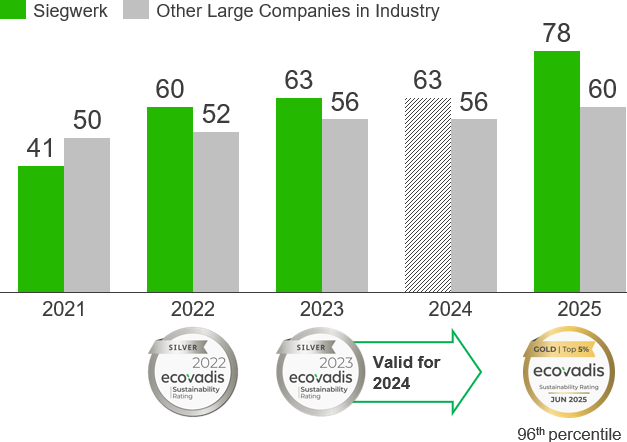
Sustainable procurement improvements reflected, among other measures, release of the Business Partner Code of Conduct, supplier risk assessment through EcoVadis, HorizonNOW 2030 supplier targets, and regular training and communication. The full scorecard is available to customers and partners upon request. A re-evaluation is planned for Q4 2026.
Figure 36: The way to Gold: EcoVadis year-over-year improvements
Feedback from the 2025 rating guides continuous improvement in an environment where the benchmark for top performance continues to rise.
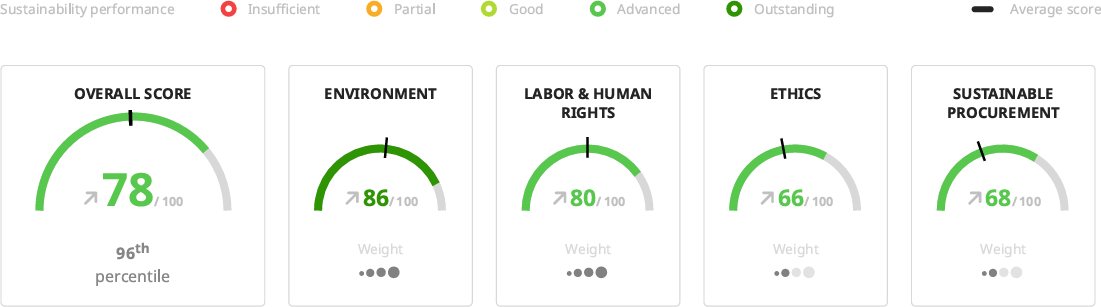
Figure 37: EcoVadis scorecard
12.4.2 Carbon Disclosure Project (CDP)
Section titled “12.4.2 Carbon Disclosure Project (CDP)”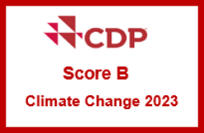
Siegwerk participates in CDP’s climate disclosure program. The moste recent scoring took place in 2023, when Siegwerk received an overall B score. Strengths highlighted by CDP at that time included integrating climate as a value driver, emission-reduction efforts, stewardship on circular and lower-impact products, and transparent reporting. Category scores showed particular strength in risk-management processes (A) and emissions-reduction initiatives and low-carbon products (A-).
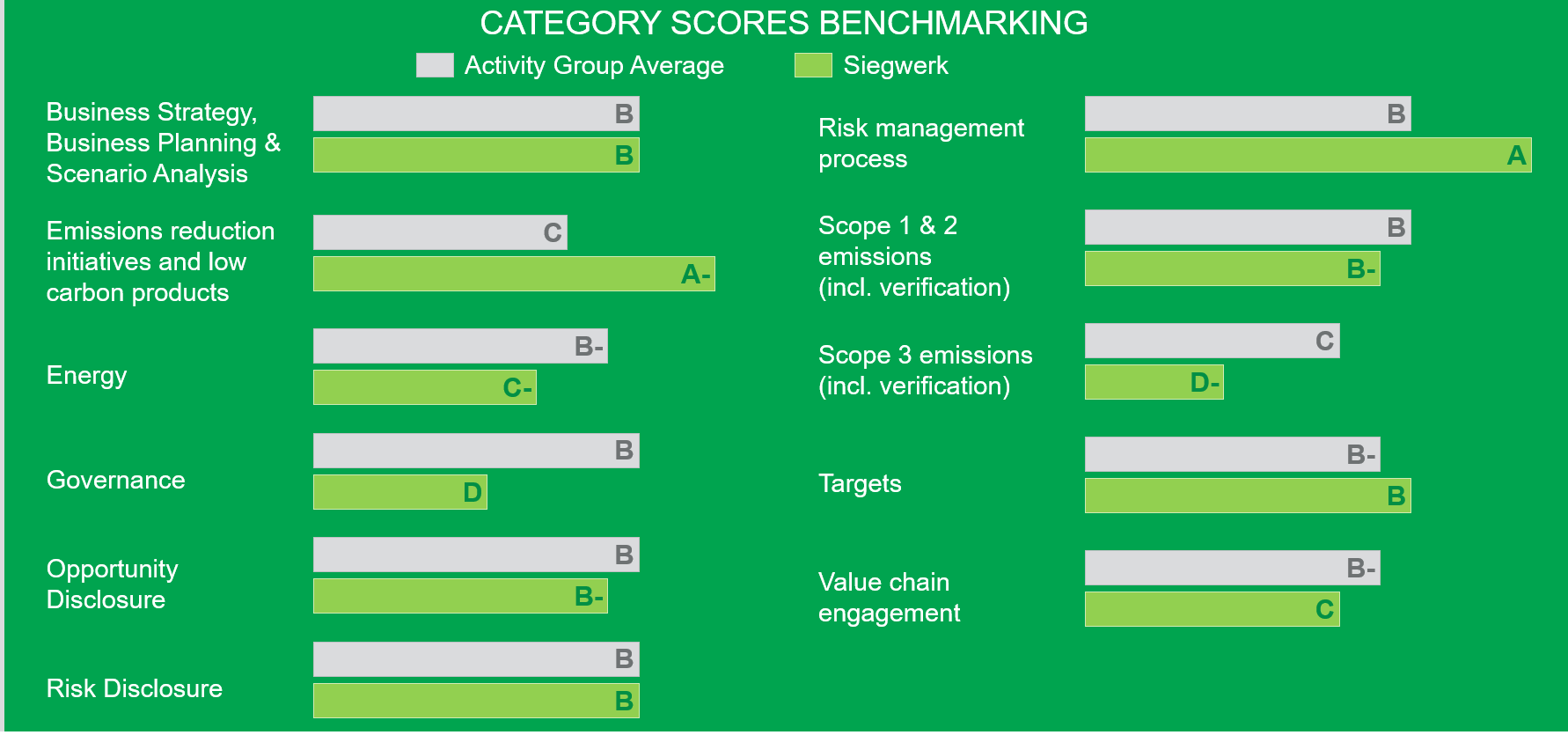
Figure 39: Excerpt CDP scorecard 2023
As this report is being written, Siegwerk is preparing for the CDP rating 2026. Results were not yet available upon completion of this report.
While no prediction is possible for the upcoming score, advancements have been made in CDP-relevant areas. These include third-party data verification activities, 100% renewable electricity, strengthened sustainable-procurement governance and further development of product innovations addressing circularity and carbon reduction.
Due to the significant internal effort required for the CDP rating and the niche value as a privately owned company, Siegwerk has decided to undergo the rating only every few years. While we value transparency and external benchmarking, we need to ensure that ratings do not divert too many resources from actions that practically advance our strategy and create the sustainable impact we seek.
12.4.3 Third Party Verification and Validation of Carbon Data
Section titled “12.4.3 Third Party Verification and Validation of Carbon Data”This sustainability statement as a whole has not been subject to independent third-party assurance. What we have obtained, and what this section describes, is targeted external verification and validation of our greenhouse gas accounting: the corporate inventory for selected years, and the systematic approach we use to calculate partial product carbon footprints for inks, coatings and varnishes. Both engagements were performed by TÜV SÜD Industrie Service GmbH, a verification body accredited by DAkkS under ISO 17029 together with DIN EN ISO 14065. The statements were issued in Munich on 9 July 2024.
The corporate carbon footprint (CCF) was verified: the greenhouse gas declaration for defined inventory years was checked against the applicable standards and found compliant.
The partial product carbon footprint (P-PCF) was validated: the calculation and reporting method was checked and found appropriate. The product opinion is not a verification of any individual product footprint, but a validation of the methodology we apply when calculating individual P-PCFs.
The table below provides a more detailed overview of the scope of verification and validation.
Corporate carbon footprint (CCF) | Partial product carbon footprint (P-PCF) | |
|---|---|---|
Statement | Verification statement 3846898-1-CCF | Validation statement 3846898-2-PCF |
Type of opinion | Verification of a greenhouse gas declaration | Validation of the systematic approach for calculation and reporting |
Subject | Siegwerk Druckfarben AG & Co. KGaA inventory years 2020 and 2022 (GHG declaration version 1, 21 June 2024) | Procedures to calculate and report partial PCFs of inks, coatings and varnishes (document version 1.1, 9 July 2024) |
How the work was done | Verification in accordance with ISO 14064-3:2019 | Validation in accordance with DIN EN ISO 14064-3:2020 |
Criteria | ISO 14064-1:2019 and the WRI/WBCSD GHG Protocol Corporate Standard and Corporate Value Chain (Scope 3) Standard | DIN EN ISO 14067:2019, in particular Annex C (normative) |
Conclusion | The declaration was found compliant with the requirements of the norms | We have developed appropriate procedures to calculate and report a partial PCF in accordance with DIN EN ISO 14067:2019 |
Level of assurance | Reasonable | Reasonable |
Materiality | 5% for Scope 1 and 2; 10% for Scope 3; relative to total emissions | 5% for processes we control (production); 10% for upstream and downstream emissions (raw materials, transportation); relative to total emissions |
Validity of the statement | Only for the stated scope and together with the verification report | Only for the stated scope and together with the validation report; does not verify a single specific PCF |
Table 31: Overview of scope of third-party carbon data validation and verification
The work itself combined on-site inspections, document review and virtual audits with our staff. The methodology behind the product footprints was developed and reviewed with the external life-cycle consultancy Ramboll before independent validation by TÜV SÜD.
The verification statements are available upon request.
Corporate carbon footprint
Section titled “Corporate carbon footprint”The verified declaration covers two calendar years: 1 January to 31 December 2020, and 1 January to 31 December 2022. 2020 is also the baseline year for our science-based targets. Other scope 3 categories were assessed as not relevant for the organization and the reporting periods.
Reasonable assurance is a high bar, but it applies only to the years and the declaration that were in scope. Hence, while we follow the same approaches and have implemented key learnings from the verification process, data beyond 2022 itself is not verified.
The decision not to verify our carbon data each year is based on the limited value Subsequent annual verification would provide in relation to the effort required. Furthermore, we had been working on the assumption that we would already be subject to mandatory CSRD reporting, and thus audit, as of 2025 which would have been a reasonable time span between verifications.
Partial product carbon footprint
Section titled “Partial product carbon footprint”Customers increasingly need product-level greenhouse gas data to complete their own carbon assessments. We therefore calculate a partial product carbon footprint for the inks, coatings and varnishes we sell, expressed in kilograms of CO2e per kilogram of product. TÜV SÜD confirmed that we have developed appropriate procedures to do this in accordance with DIN EN ISO 14067:2019.
The life-cycle inventory is calculated as a partial footprint, covering both cradle-to-factory-gate and cradle-to-customer-gate. It includes extraction, processing and transportation of raw materials; production through grinding, dispersion and subsequent blending with solvents and additives; and transportation to the customer’s gate. Packaging of raw materials and of finished products is not included in the inventory. The validated procedures use product composition and the ecoinvent v3.8 life-cycle database (issued 2021) – among other. The temporal representativeness of the resulting P-PCF values runs until the end of 2025.
The validation shows that the method is sound and that values built on that 2020/ecoinvent v3.8 foundation were representative through the reporting year. We still vet supplier-specific data before using it to replace database values, which is why ISO 14067 compliance is the quality bar we set in SustainUP, rather than accepting any figure a supplier can produce.
One finding of the validation process was that an update of the databases used is required. Hence, this report is the last one that will use ecoinvent v3.8. We expect that the update in version will increase the overall scope 3 emissions from purchased goods and services and subsequently also the specific P-PCF values. This links to the planned reverification of our 2020 baseline values for SBTi in 2027, which is further explained in Chapter 12.4.4.
12.4.4 Science-Based Target Initiative (SBTi)
Section titled “12.4.4 Science-Based Target Initiative (SBTi)”In 2022, the Science Based Targets initiative validated Siegwerk’s near-term and net-zero targets, which form a core part of HorizonNOW, making Siegwerk the first in the industry to set ambitious and SBTi-validated climate targets.
Near-term targets against a 2020 baseline include a 42% absolute reduction in Scope 1 and 2 greenhouse gas emissions by 2030 (1.5°C-aligned), maintaining 100% renewable electricity through 2030, and a 25% absolute reduction in Scope 3 emissions from purchased goods and services by 2030 (well-below-2°C pathway for that Scope 3 target). The long-term SBTi-validated net-zero target commits Siegwerk to net-zero greenhouse gas emissions across the value chain by 2050, including deep absolute reductions consistent with the Net-Zero Standard.
The Scope 1 and 2 near-term targets validated by SBTi are currently less ambitious than the Group HorizonNOW 2030 climate targets disclosed in Chapter 5. In addition, baseline data will need to be updated to reflect the acquisition of Hi-Tech Inks in India in 2026 and the mandatory database updates used in Scope 3 calculations as Siegwerk continues to align fully with the GHG Protocol and ISO 14067. Revalidation of targets and baseline values is planned for 2027.
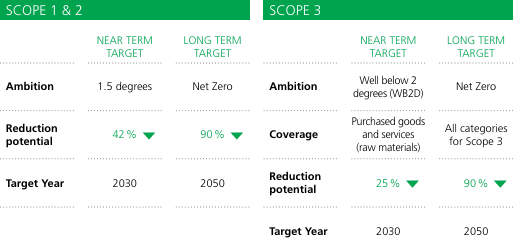
Figure 40: Overview SBTi-verified climate targets
12.4.5 ISO Certificates
Section titled “12.4.5 ISO Certificates”Siegwerk relies on internationally recognized management-system standards to support consistent quality, environmental stewardship, occupational health and safety, and—where implemented—energy management. Relevant standards include ISO 9001 (quality), ISO 14001 (environment), ISO 45001 (occupational health and safety) and ISO 50001 (energy). An up-to-date overview is published on Siegwerk’s website and can be accessed here. A selection is provided in Table 32.
Region | Location | ISO 9001 | ISO 14001 | ISO 45001 | ISO 50001 |
|---|---|---|---|---|---|
EMEA | Siegburg (DE) | Yes | Yes | — | Yes |
EMEA | Büdingen (DE) | Yes | Yes | — | Yes |
EMEA | Annemasse (FR) | Yes | Yes | — | — |
EMEA | Aarberg (CH) | Yes | Yes | — | — |
EMEA | Tuzla (TR) | Yes | Yes | — | — |
Americas | Toluca (MX) | Yes | Yes | Yes | — |
Americas | Diadema (BR) | Yes | Yes | — | — |
Americas | Tortuguitas (AR) | Yes | Yes | — | — |
Asia | Shanghai (CN) | Yes | Yes | Yes | — |
Asia | Bhiwadi (IN) | Yes | Yes | Yes | — |
Asia | Tangerang (ID) | Yes | Yes | Yes | — |
Asia | Samut Sakhon (TH) | Yes | Yes | Yes | — |
Table 32: Overview ISO certificates