
8 Expanding Circularity
ESRS Ref: not applicable, supplementary information only
ESRS cross-references: not applicable, supplementary information only
HorizonNOW 2030: Sustainable operations, target 4 / Sustainable products, target 8
Supplementary information.
The double materiality assessment clearly identified the circularity of products as material. Beyond product-related resource outflows, however, Siegwerk sees relevance in further aspects of circularity and product sustainability. First, ensuring we apply circular economy principles increasingly in our own operations (Chapter 8.1). Second, deliberately expanding the scope of product sustainability from circularity to include the carbon lifecycle of packaging (Chapter 8.2.1), maintaining product safety as sustainability baseline (Chapter 8.2.2), and strengthening a data driven approach to assessing product sustainability (Chapter 8.3). These are disclosed on a purely voluntary basis. Some of these topics have targets in the strategy cycle of HorizonNOW 2025, against which this chapter will report progress. For other topics we have established targets in the HorizonNOW 2030 strategy cycle which are offered as an outlook with future progress tracking. An overview is provided in Table 17 below.
Voluntary target4 | Strategic cycles | Progress/outlook reporting | Chapter reference |
|---|---|---|---|
10% reduction of waste relative to produced volumes | HorizonNOW 2030 | Outlook | |
Establish product environmental footprint data for 100% of products | HorizonNOW 2025 | Progress | |
Be the trendsetter for the safest inks and coatings | HorizonNOW 2025 | Progress | |
Establish a data-backed sustainable product assessment to strengthen product trust and transparency | HorizonNOW 2030 | Outlook |
Table 17: Voluntary targets for holistic circularity and product sustainability
8.1 Circular Economy Beyond Products: Operational Waste
Section titled “8.1 Circular Economy Beyond Products: Operational Waste”Although waste in its own operations was not identified as material in the double materiality assessment, Siegwerk has decided to set a quantified waste reduction target for its own operations as part of the new sustainability strategy HorizonNOW 2030, aiming for a 10% reduction of waste relative to produced volumes. This decision was not based on materiality but on strategic consistency. As a company that strives to enable circularity in the market, we consider it appropriate to apply the key principles of reducing, reusing, and recycling in our own operations as well, thereby completing the cultural mindset of circularity. Anchoring a quantified target in the new strategy gives the topic greater focus.
Local entities have already been active in reducing waste and identifying optimized end-of-life scenarios. In a first step, the global target will lead to higher scrutiny of data accuracy, followed by facilitated actions.
8.2 Sustainable Products Beyond Circularity
Section titled “8.2 Sustainable Products Beyond Circularity”8.2.1 Lifecycle Carbon Reduction Through Inks & Coatings
Section titled “8.2.1 Lifecycle Carbon Reduction Through Inks & Coatings”This category comprises products that are designed to reduce CO₂ emissions across the life cycle of the packaging. The reduction can result from a reduced fossil partial Product Carbon Footprint of the inks and coating, an increase in the biogenic content, enabling lower energy use at the printer and converter, or by enabling the use of less carbon intensive packaging substrates (often in combination with enabling circularity). A few concrete 2025 market introductions are listed below.
UniLEAF
Section titled “UniLEAF”UniLEAF (Low Energy Acrylic Free) is a water-based, acrylic-free extender for post-print applications. Building on the established UniNATURE platform, it offers up to 50% lower CO₂ footprint, increased biogenic carbon content, and lower drying energy requirements compared with UniNATURE. The reduction is achieved by replacing acrylic resins entirely with polymers derived from regenerative, bio-based raw materials, which more than doubles the share of biogenic carbon. The bio-based resins can be integrated into standard ink manufacturing processes without major investments in production technology.
The concept has been validated on an industrial printing press, where UniLEAF was benchmarked directly against UniNATURE using measured on-press production data at a comparable speed of 5,000 pieces per hour. Drying energy demand fell from approximately 148 kW/h for UniNATURE to approximately 124 kW/h for UniLEAF, an energy saving of more than 15% at the same production speed. Projected annually, replacing UniNATURE with UniLEAF can save approximately 80 MWh of energy per press per year, and thereby reduce corresponding carbon emissions, assuming typical printing operation schedules of 12 hours per day and 280 days per year.
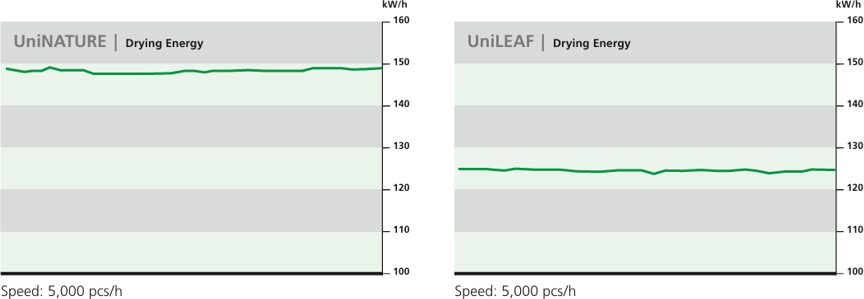
Figure 24: UniNATURE and UniLEAF drying energy comparison
As a next step trials will be expanded with additional external partners to further validate robustness and reproducibility across a range of press technologies and packaging types. Given its innovative design, the UniLEAF formulation concept also has the potential to serve as the nucleus for a new generation of sustainable printing inks.
Dual-cure UV inks
Section titled “Dual-cure UV inks”Dual-curing UV inks allow for an easy switch from conventional UV to LED curing, which is more energy efficient for the packaging converter. Examples include SICURA Nutriflex LEDTec, a compliant dual-cure system that can be cured using either LED or UV mercury lamps, and SICURA Flex Dual Cure, a dual-cure system designed for non-food applications and for food packaging where processing prevents migration.
Carbon reduction through mono-material structures
Section titled “Carbon reduction through mono-material structures”Switching to mono-material structures enabled by Siegwerk inks and coatings can reduce the overall CO₂e material footprint of the packaging. In the collaboration with Borouge described in Chapter 7.4, a reduction of approximately 10% in the use of substrates used was achieved.
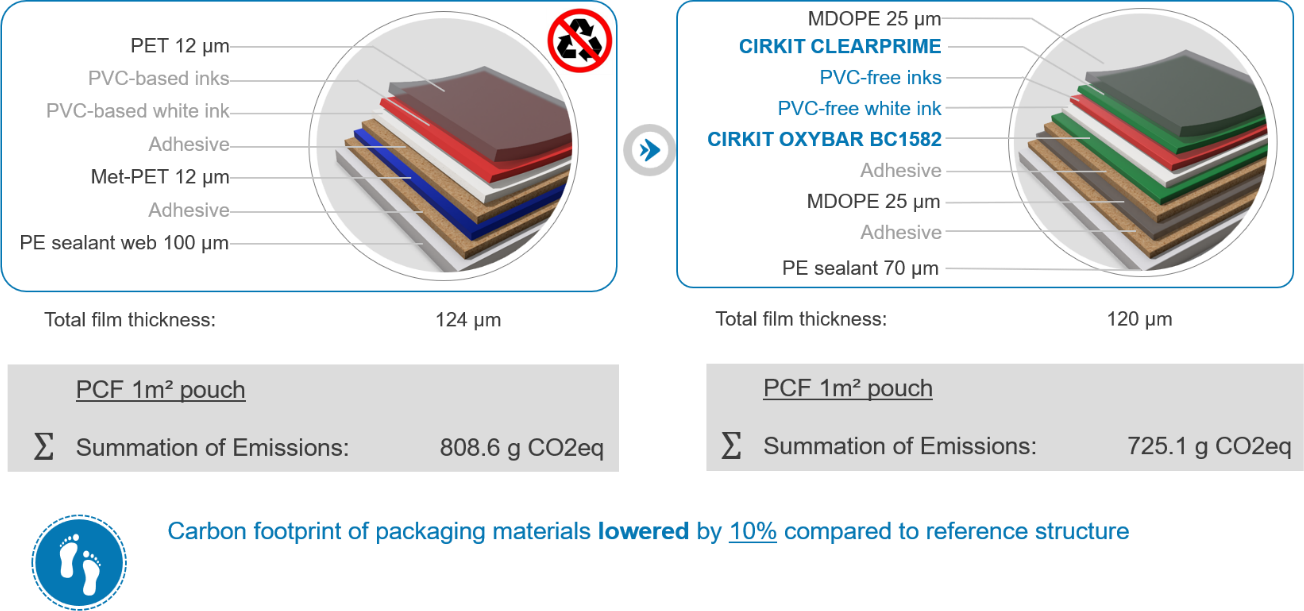
Figure 25: Case study: Reduction of carbon of packaging substrates through inks and coatings
8.2.2 Product Safety
Section titled “8.2.2 Product Safety”As part of HorizonNOW 2025, product safety and responsibility was a key strategic pillar covering both environmental and consumer safety targets. Two targets were defined:
- establish product environmental footprint data for 100% of products; and
- be the trendsetter for the safest inks and coatings.
In this chapter the progress against these 2025 targets is assessed, changes in terms of materiality of the topic of product safety are explained and its role in the strategy cycle HorizonNOW 2030 is outlined.
HorizonNOW 2025 target progress
Section titled “HorizonNOW 2025 target progress”Product Environmental Footprint
Section titled “Product Environmental Footprint”By the end of the reporting period, Siegwerk was able to provide a partial product environmental footprint (P-PEF) for all of its products. The target was therefore fully achieved.
The P-PEF transparently communicates essential environmental parameters and enables comparability, standardization, and harmonization of product environmental performance. It relies on life cycle assessment (LCA) principles, considering material flows, energy consumption, emissions, and waste streams associated with a product or organization. By analyzing the entire life cycle, a comprehensive picture of environmental impacts emerges. The benefits of the P-PEF include consistency through a standardized approach, supply chain consideration that promotes sustainable practices, and the ability to reduce environmental impact through informed decision-making.
On single product level, Siegwerk can share information on the following impact categories:
- partial Product Carbon Footprint (CO₂e) (P-PCF);
bio-renewable content;
- acidification potential;
- land use;
- eutrophication potential;
- water footprint;
- ozone depletion potential; and
- circular material use rate.
Further information is available in the P-PEF whitepaper as well as a P-PCF whitepaper.
Outlook: an increasing number of customers requests partial product carbon footprint (P-PCF) data to feed into overall packaging structure assessments. We expect this to become common practice and are already seeing the first proactive consideration of P-PCF in discussions around the introduction of new ink series.
Trendsetter for the safest inks and coatings
Section titled “Trendsetter for the safest inks and coatings”Being a trendsetter for the safest inks and coatings is not a purely quantifiable target. It reflects Siegewerk’s approach towards product safety, which rests on four key principles:
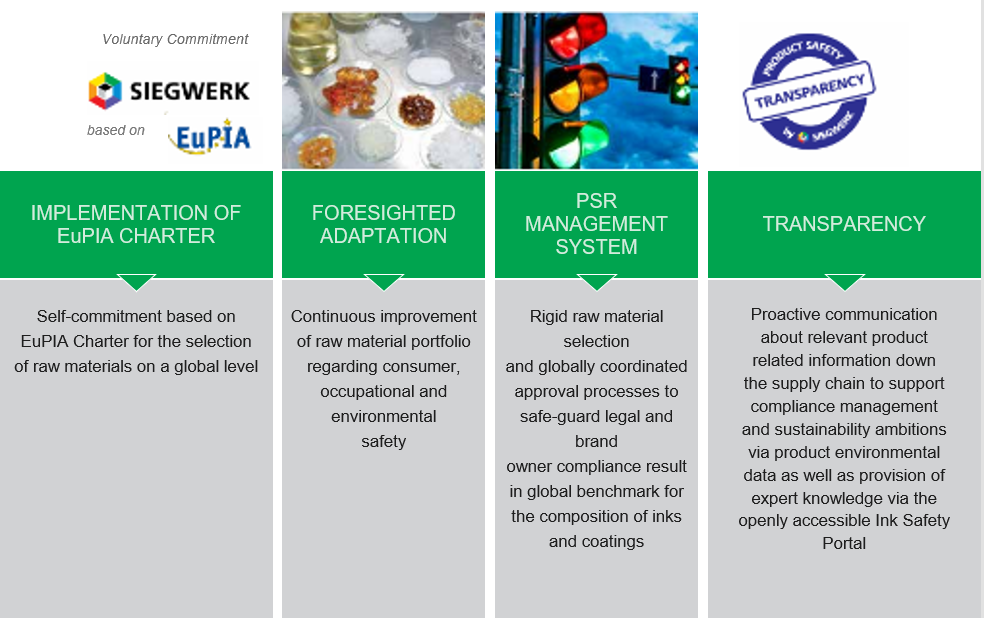
Figure 26: Four key principles for safest inks & coatings
Tangible outputs at the end of the reporting period were the successful phase-out of substances to comply with the highest standards, and the introduction of a product safety score for all products. In addition, an automated product safety assessment was introduced, reinforcing system controls and the ability to act with foresight on product safety.
Product safety is also reflected in product innovation. For the Inkjet business unit, Siegwerk presented SICURA Jet, a high-performance, CMR-free (carcinogenic, mutagenic, or reprotoxic), UV-curable inkjet series delivering excellent adhesion and high durability for labels, aluminum blister packaging, and direct-to-object printing. With SICURA NutriJet, Siegwerk presented an industry-leading low-migration ink series designed to meet the highest safety standards for food, pharmaceutical, and hygiene packaging applications. A further example is the VEGA product series primarily used for sheetfed offset printing on paper and board substrates, which offers a mineral-oil free option, supporting dedicated pushes to mineral-oil free inks in highly competitive markets such as India.
While not being a quantitative target based on the qualitative achievements made in the strategy cycle HorizonNOW 2025 this target can be seen as being achieved.
Product safety under HorizonNOW 2030
Section titled “Product safety under HorizonNOW 2030”Product safety has long been an important operating priority for Siegwerk, which is why it featured as a strategic topic with a dedicated target under HorizonNOW 2025. This also served to keep product safety part of overall industry advancement by setting the tone and the ambition level.
For HorizonNOW 2030, which predominantly used the double materiality assessment to identify key material topics, product safety is no longer included as a concrete target. The reasoning is twofold and, in both cases, connected to the increasing maturity of the topic.
Siegwerk has reached a highly mature system of controls, checks, and balances, including formulation and substance controls, regulatory compliance processes, customer and food-contact specifications, documented product stewardship procedures, and clear internal responsibilities. This leaves a very low level of likelihood of adverse impacts, while the company continues to follow the spirit of the safest ink and coatings as outlined above.
The industry as a whole is maturing around product safety, supported by regulatory developments in a number of countries, such as restrictions on toluene use (India, and under discussion in the Philippines) or mineral-oil-free inks (India). Increasing globalization and the spread of global standards reduce regional differences, which limits the need to drive the topic into the industry through individual sustainability positioning.
Siegwerk’s proactive work in the regulatory space remains unchanged and continues to form the foundation of the trendsetter perspective.
8.3 Outlook: Product Sustainability Assessment
Section titled “8.3 Outlook: Product Sustainability Assessment”As part of HorizonNOW 2030, Siegwerk is establishing a data-backed sustainable product assessment to strengthen product trust and transparency across its portfolio. The assessment is designed to evaluate products against core dimensions, namely circularity, bio-renewable content, partial product carbon footprint, and product safety, and to embed these criteria into formulation and innovation decisions. By making sustainability performance more comparable and evidence-based, the framework will support regulatory compliance, respond to rising customer expectations, and reinforce Siegwerk’s role as an enabler of sustainable packaging.
Owing to the investments made in sustainability-driven product data based on external standards, detailed methodology, and governance, Siegwerk has built a solid foundation to bring environmental product data together and to offer a holistic sustainability assessment.
Footnotes
Section titled “Footnotes”Not based on identified materiality during the DMA. ↑